


Strain Gauge manufactured by IPA are of foil type and comes in two different impedances which are 120 Ohms and 350 Ohms.
These are used in the manufacture of loadcells and various strain measurement applications.
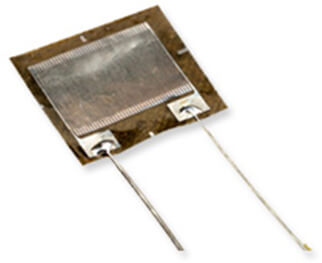
What is a Strain Gauge and How is it Used?
A strain gauge is a precision sensor used to measure the deformation (strain) of an object when subjected to force, pressure, or mechanical stress. When a material stretches, compresses, or bends, the strain gauge detects the change in length and converts it into an electrical signal. This makes it one of the most fundamental tools for understanding mechanical behavior in engineering and industry.
How Does a Strain Gauge Work?
A typical strain gauge consists of a very fine, grid-like metallic wire or foil mounted on a flexible backing. When the object it is attached to deforms, the strain gauge deforms as well. This changes its electrical resistance, which can be precisely measured. By connecting the strain gauge into a Wheatstone bridge circuit, even very small changes in resistance can be detected and translated into strain values.
Key Applications of Strain Gauges
-
Load Cells & Force Sensors
Strain gauges are the building blocks of load cells used to measure weight, tension, and compression forces. -
Pressure Sensors
Integrated into diaphragms, they measure pressure in gases and liquids by detecting minute deflections. -
Torque & Bending Measurement
Used in shafts and rotating equipment to monitor torque, bending moments, and structural loads. -
Structural Health Monitoring
Applied on bridges, aircraft, or machinery to monitor stress levels and prevent failure. -
Research & Development
Essential for experimental stress analysis and validation of computer simulations.
Why Strain Gauges Matter
Strain gauges are critical for ensuring safety, reliability, and performance in modern engineering. From aerospace and automotive to robotics and industrial machinery, they provide the data needed to design stronger products, optimize performance, and detect issues before they become failures.