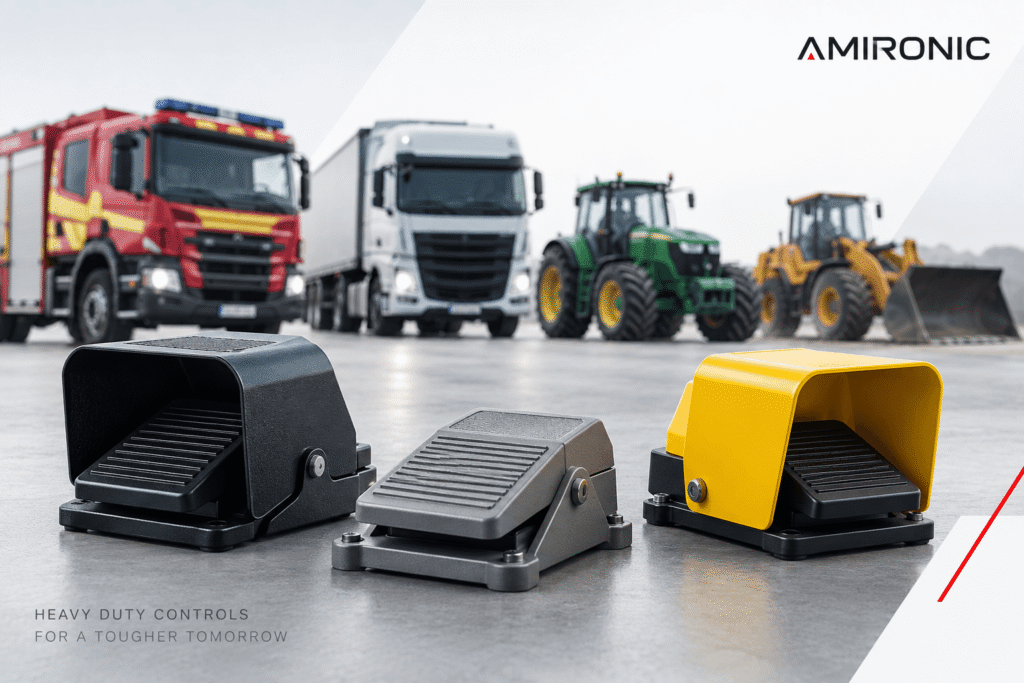
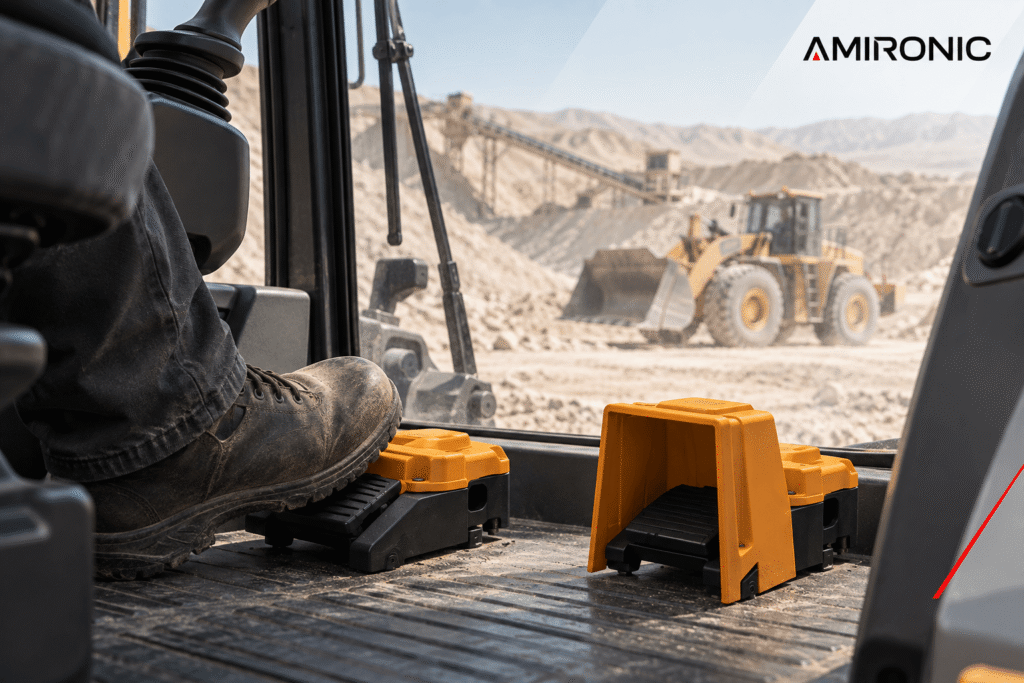
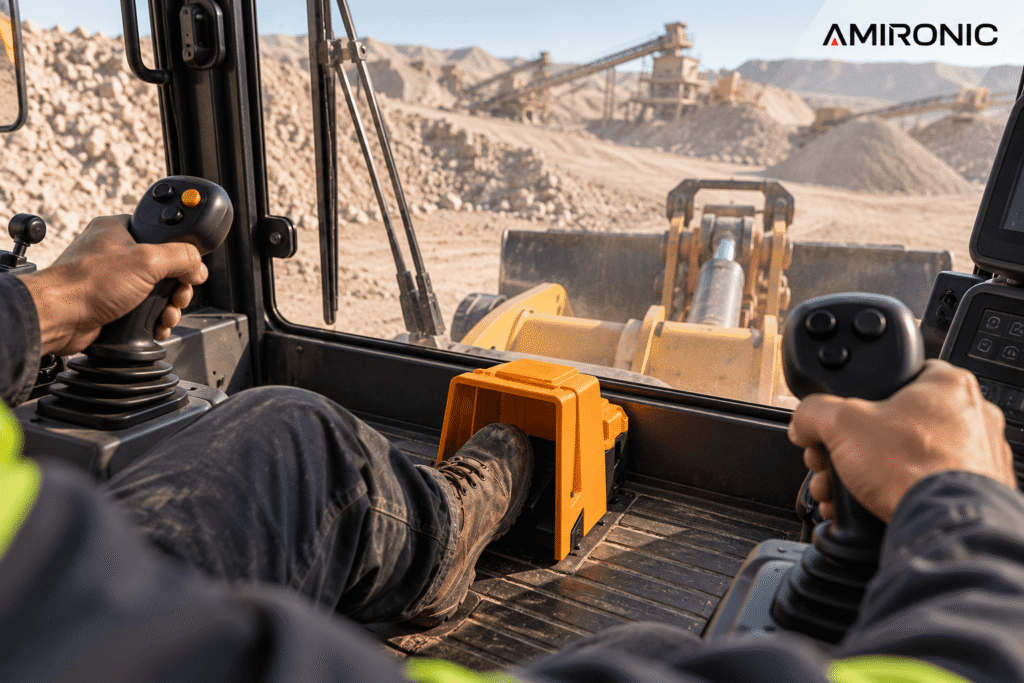
A Special Purpose Vehicle is more than just a means of transportation. In many cases, it is also a mobile work system, where the driver or operator must control additional equipment while working in an environment that is not always clean, quiet, or comfortable.
Emergency vehicles, service vehicles, trucks, agricultural equipment, construction machinery, and Special Purpose Vehicles often incorporate multiple systems beyond the vehicle’s standard driving functions: communications, alarms, hydraulic equipment, lighting, safety systems, auxiliary equipment, and dedicated operating mechanisms.
Each of these systems ultimately requires an operator interface.
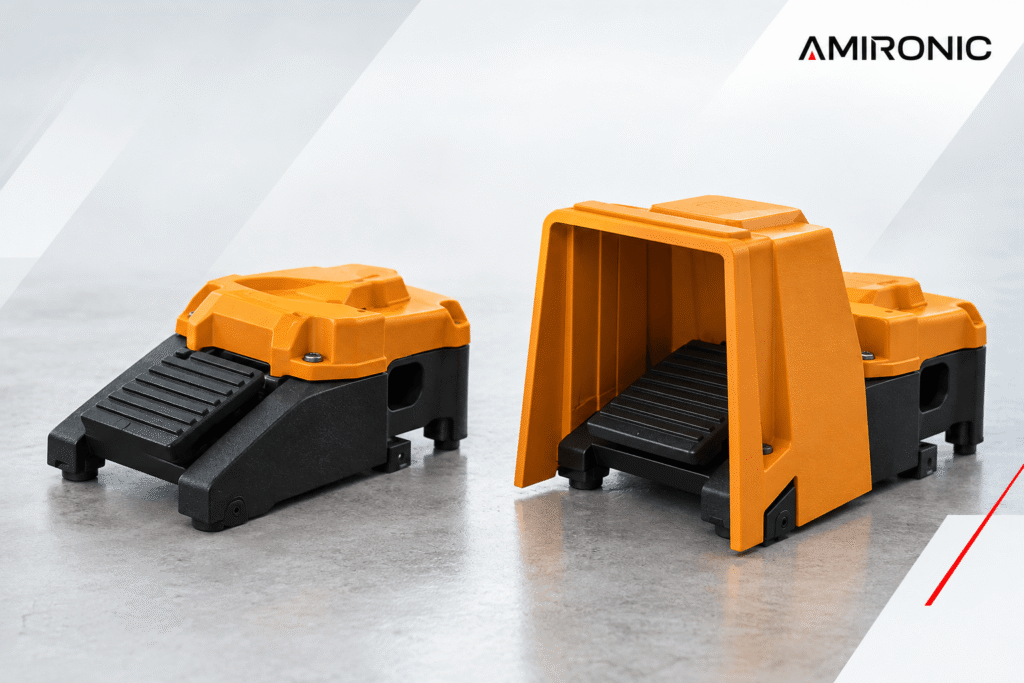
This may be a Push Button, manual switch, Footswitch, PTT, Panic Button, or another dedicated Control. But in a Heavy Duty environment, the question is not only what function the switch performs. It is also necessary to consider who operates it, under what conditions, how often, and what happens if the control is not activated at exactly the right moment.
Why Is a Switch in a Special Purpose Vehicle an Engineering Component, Not Just an HMI Accessory?
When designing a stationary system, it may be possible to position a Push Button in a convenient location and assume that the user will operate it with a clean hand in a controlled environment.
In a Special Purpose Vehicle, conditions can be completely different.
The operator may be wearing gloves. The vehicle may be moving. The system may be exposed to vibration and shock. Dust, water, mud, or cleaning agents may reach the control area. In some applications, the operator must locate and activate the control quickly without diverting attention from the primary task.
For this reason, selecting a Heavy Duty Control requires several factors to be considered simultaneously:
- Function – What action is the control required to perform?
- Operating Environment – Is it exposed to water, dust, dirt, vibration, or outdoor conditions?
- Ergonomics – Is it operated by hand or foot, while wearing gloves, or while driving and performing another task?
- Operating Logic – Momentary, Latching, Normally Open, Normally Closed, or another configuration.
- Mechanical Reliability – How many operating cycles are required, and what level of mechanical stress is expected?
- Integration – How is the control installed and connected to the vehicle’s electrical or electronic system?
This means there is no single “Heavy Duty switch” that is suitable for every vehicle.
A Panic Button in a bus, a PTT control in an emergency vehicle, and an operating control on agricultural equipment may all belong to the world of Heavy Duty Controls, but the requirements for each can be completely different.
Heavy Duty Starts with the Operating Environment
The term Heavy Duty does not refer only to the physical strength of the switch.
In Transport and Mobile Equipment applications, the control is part of a system that operates in the real world: inside a vehicle cab, on an external control panel, next to mechanical equipment, in an area exposed to the weather, or at a workstation where the operator repeatedly uses it throughout the working day.
Therefore, even at the requirements definition stage, the question should not simply be “Which switch do we need?” but rather:
Where will it be installed, who will operate it, and what will actually be happening around it during operation?