Introduction: Why an Accurate IMU Is Not Always the Right Choice for High-Speed Control Systems
In dynamic control systems, measurement quality is determined by more than sensor accuracy alone. An Inertial Measurement Unit (IMU) may deliver excellent accuracy under static conditions yet struggle to provide the information required by a control system operating under rapid motion, vibration, or abrupt changes in direction.
This challenge is particularly significant in military and aerospace applications, including electro-optical stabilization systems, stabilized turrets, unmanned platforms, and precision tracking systems. In these applications, the controller must receive up-to-date motion data, process it, and respond with minimal delay.
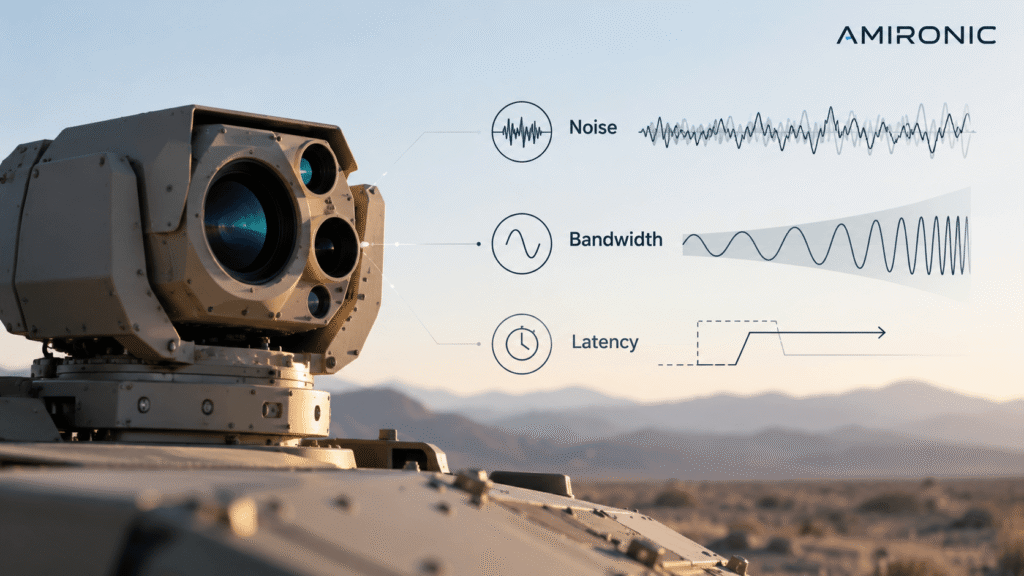
Three key parameters influence an IMU’s ability to meet these requirements:
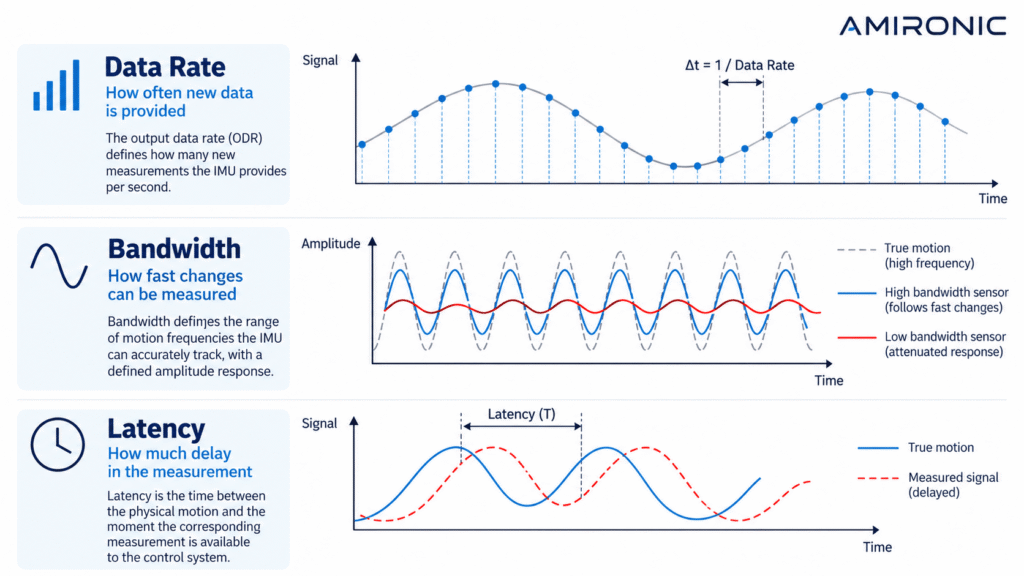
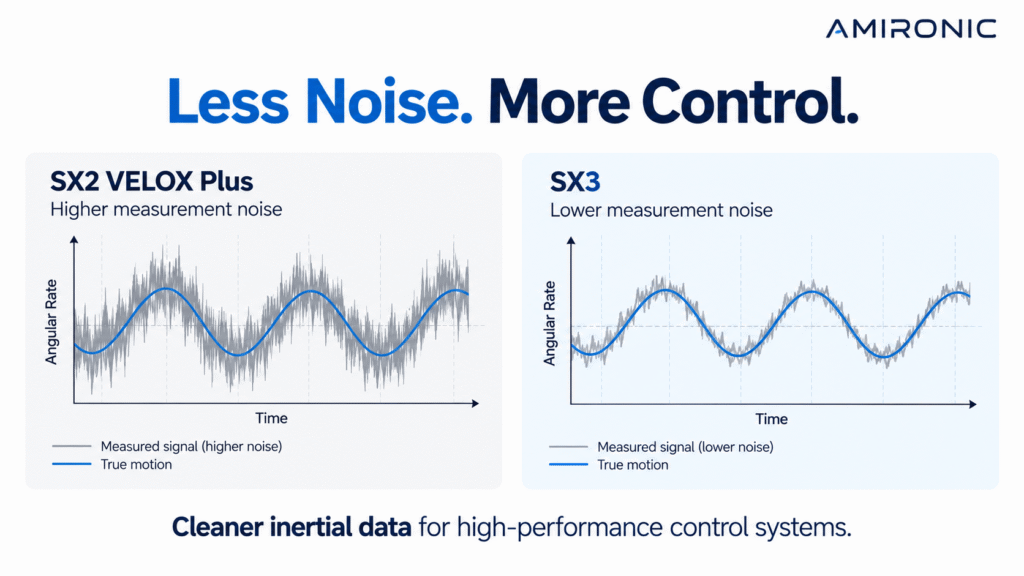
- Noise: Random fluctuations in the sensor output that limit the system’s ability to distinguish small, genuine movements from measurement noise.
- Bandwidth: The range of frequencies over which the sensor can accurately track dynamic changes within a specified response tolerance.
- Latency: The time between the occurrence of physical motion and the availability of the corresponding measurement data to the control system.
These parameters are closely related, and improving one may sometimes involve compromising another.
For example, aggressive digital filtering can significantly reduce measurement noise, but it may also introduce additional latency and limit the usable bandwidth. Conversely, increasing bandwidth allows the sensor to capture faster motio