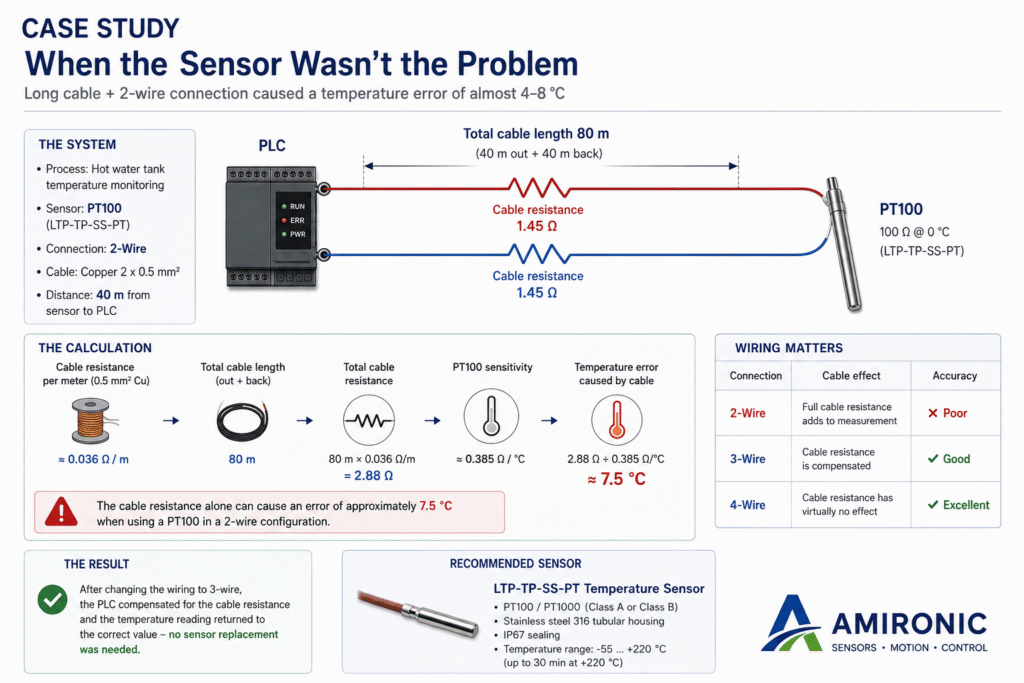
Most of us assume that if a PLC displays the wrong temperature, the temperature sensor must have failed.
In many cases, however, that is not the real problem.
Engineers often replace the PT100 sensor, recalibrate the system, or even replace the PLC input module, only to discover that the temperature reading is still incorrect.
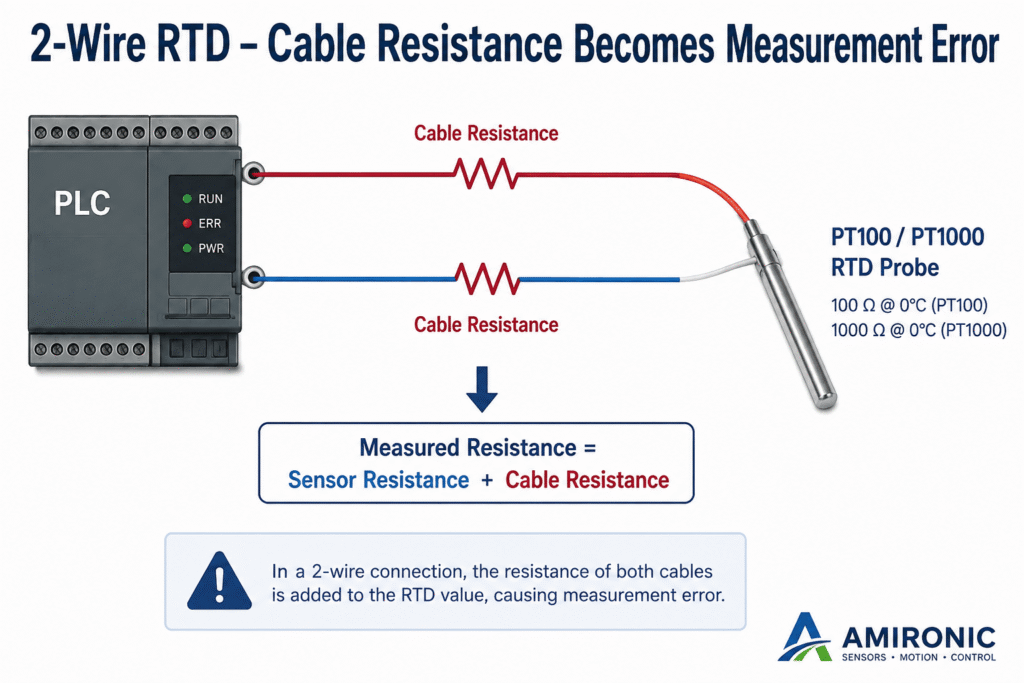
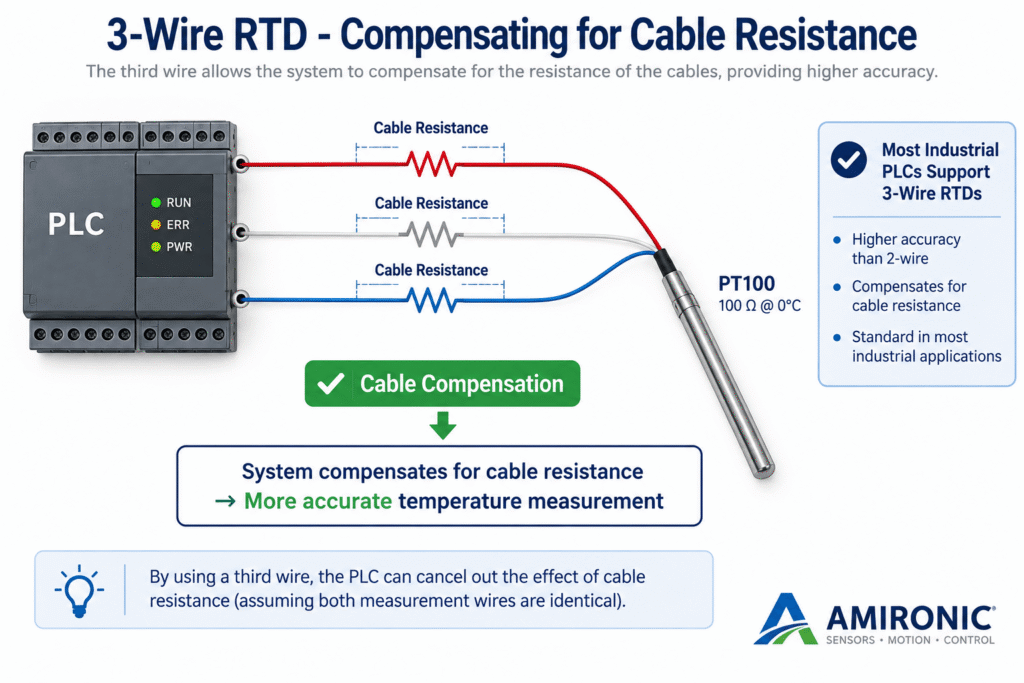
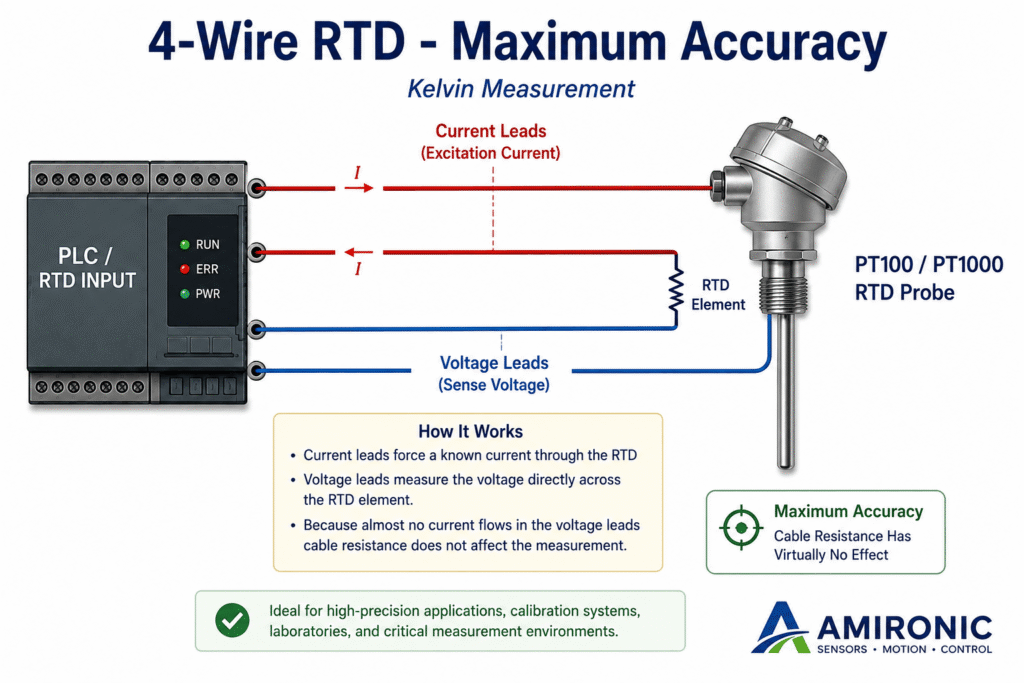
The real cause may be cable resistance, the wiring method, cable length, electrical noise, or even selecting the wrong type of temperature sensor in the first place.
To understand why this happens, we first need to step back and ask a more fundamental question:
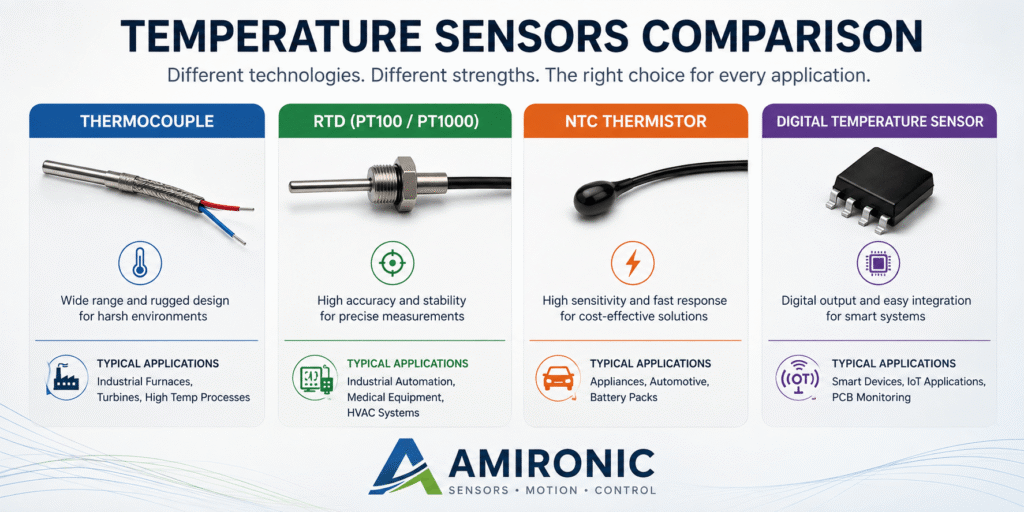
What types of temperature sensors are available, and what are the key differences between them?
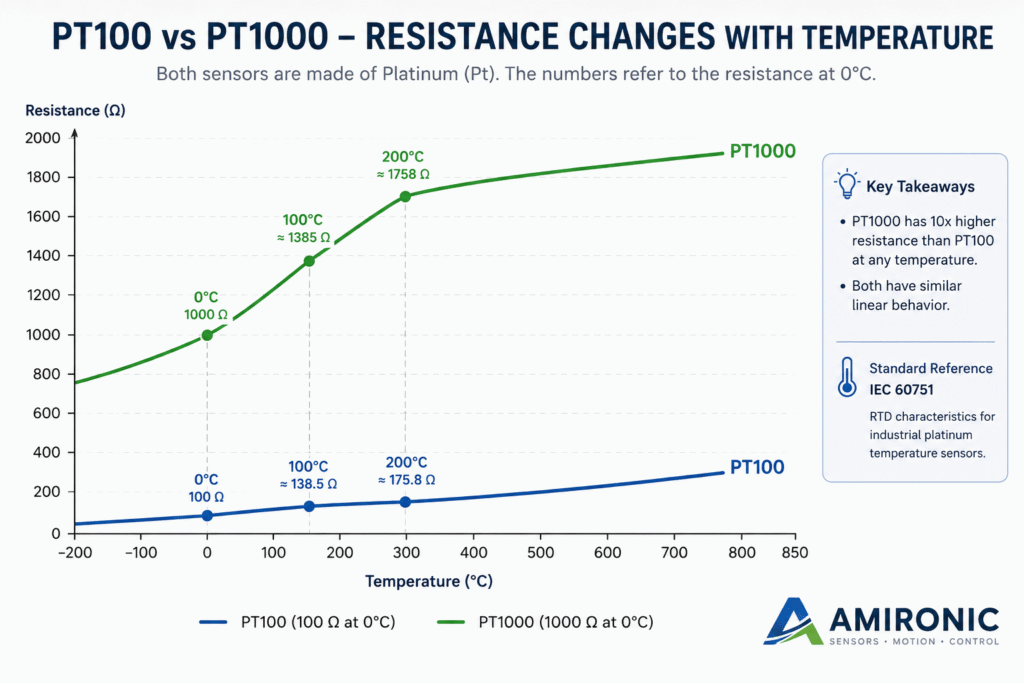
In this article, we’ll explore the most common temperature sensing technologies, explain how each one works, discuss where each technology is best suited, and examine why RTD sensors, particularly PT100 and PT1000, have become the industry standard for industrial automation, medical equipment, HVAC systems, and other precision measurement applications.