flagעברית
flagEnglish
3 Rabinovich St., Petah-Tikva, Israel
+972 3 9047744
office@amironic.co.il
Facebook
Twitter
LinkedIn
YouTube
  • Products
    • MEMS Inertial
      • MEMS Gyroscopes
      • Inertial Measurement Units
      • MEMS Accelerometers
      • Inertial Navigation
      • AHRS
    • Circuit Breakers
      • Airpax Circuit Breakers
      • Electronic Circuit Breakers
      • Aircraft Circuit Breakers
      • Thermal Circuit Breakers
      • Sealing Solutions & Guards
    • Footswitches
      • Pedals & Bellows
      • USB
      • Air Switches
      • Medical
      • Modular Bases System
      • Industrial
      • Foot Potentiometers
      • Wireless
    • Mechanical & Transmissions
      • Gears
      • Sealing Solutions
      • Gearboxes
      • Couplings
      • Shafts & Bearings
      • Fasteners
      • Mechanical & Springs
      • Linear Motion
      • Anti-Vibration
    • Sensors
      • Thermostats
      • Temperature
      • Position
      • Pressure
      • Speed
      • Level Sensor
      • Load Cells
      • Flex Sensors
      • Membrane Potentiometer
    • Motors
      • Geared DC
      • Brushless DC
      • Step Motors with Gearbox
      • Torque Motors & Brushless Servo
      • DC Motors
    • Electronics
      • Xenon & IR Lamps
      • Counters & Meters
      • Microelectronics Packaging
      • Waterproof Switches
      • Micro Switches
    • Hand Control
      • Operator Controls (JOYSTICK)
      • Electrical
      • Pneumatic (Medical)
      • USB Hand Control
      • Air Push Button
      • Pressure Switch
      • IR Switch
    • Power Solutions
      • Rugged & Military Power Supply
      • Input Power Protection
      • Sealed Military Power Adaptor
      • Triple Output Military Power Supply Series – up to 250 W
    • Materials
      • Molybdenum and Advanced Alloys (TZM, MOLA, HCT)
      • Tungsten (Wolfram) and Advanced Alloys – High-Performance Materials for Extreme Conditions
      • Materials for Gears
  • Shop
  • Companies
  • About Amironic
  • News
  • Contact
Product was added to your cart

Cart

waze

Hermetic Sealing in Inertial Sensors – What Is the Difference Between IP67 and MIL-STD-883?

MEMS Gyroscope, MEMS Inertial05/11/2026amironicLTD

1. Introduction – Why Doesn’t an IP67 Rating Guarantee Long-Term Protection Against Moisture Ingress?

In military, aerospace, and defense applications, inertial sensors are required to operate under extreme environmental conditions, sometimes for years without a practical opportunity for maintenance or replacement. Inertial Measurement Units (IMUs) and gyroscopes measure acceleration and angular velocity in navigation, stabilization, guidance, and control systems, where measurement reliability is an essential part of overall system reliability.

When selecting an inertial sensor, engineers typically evaluate parameters such as measurement noise, Bias Stability, Scale Factor Error, Bandwidth, Latency, and resistance to shock and vibration.

However, another important parameter sometimes receives less attention: Package Hermeticity.

Even a sensor with excellent measurement performance may be vulnerable to long-term failure mechanisms if its enclosure allows moisture or gases to enter the internal environment containing sensitive electronic components.

1.1 Environmental Protection vs. Hermetic Sealing

An enclosure may successfully pass a water immersion test while still allowing gases or water vapor to gradually pass through microscopic leakage paths, depending on its construction and sealing method.

Therefore, IP67 compliance does not demonstrate hermetic sealing and cannot replace dedicated leak-rate testing.

1.2 Why Is Hermetic Sealing Particularly Important in Military Systems?

In military applications, environmental challenges extend far beyond direct exposure to water or dust.

An inertial sensor installed in an electro-optical/infrared (EO/IR) system, an Unmanned Aerial Vehicle (UAV), an air defense system, or a guidance platform may encounter a wide range of conditions:

  • Extreme temperature cycling: Transitions between low-temperature storage and high-temperature operation can cause expansion and contraction of enclosure materials and mechanical joints.

  • Humidity and condensation: Changes in temperature and pressure may promote condensation when moisture is present inside the enclosure.

  • Long-term storage: Military systems may remain in storage for years, yet sensor reliability must be maintained even after extended periods without operation.

  • Marine environments: Systems installed aboard vessels or near coastal areas are exposed to high humidity and potentially corrosive conditions.

  • Limited maintenance access: In some applications, a sensor failure after installation may require complex disassembly or result in reduced operational availability.

Moisture ingress into an electronic enclosure can contribute to corrosion, electrical leakage currents, degradation of electrical connections, and long-term changes in component behavior.

In inertial systems, these effects may also lead to changes in measurement performance or signal reliability, depending on the sensor architecture and the underlying failure mechanism.

It is important to distinguish between hermetic sealing at the sensor package level and internal sealing of the MEMS sensing element itself. Even when the micromechanical structure is sealed at the chip level, additional electronic components may remain outside that sealed cavity.

1.3 The Next Generation of Hermetic Packages from Gladiator Technologies

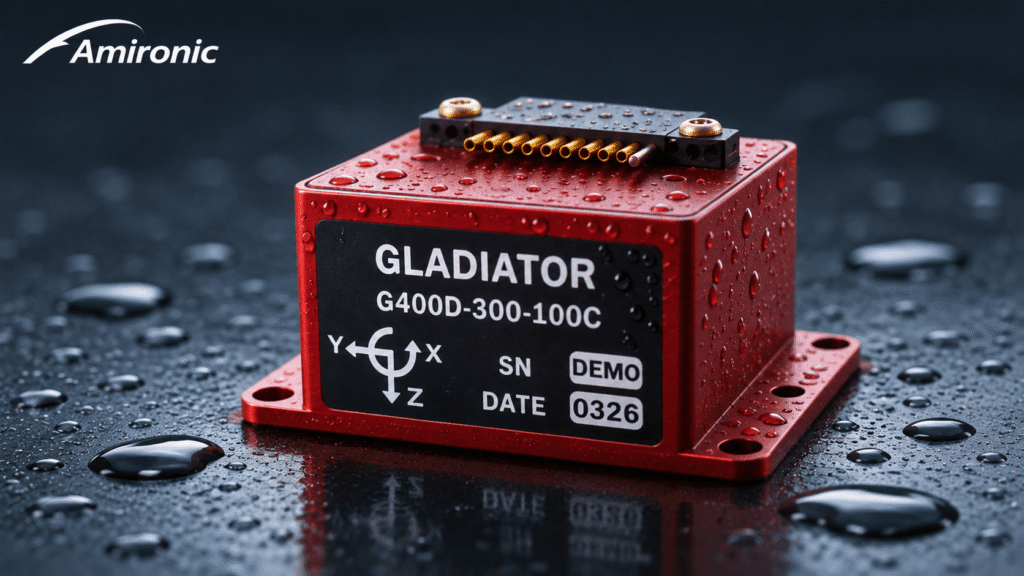
Gladiator Technologies specializes in the development and manufacturing of MEMS-based inertial sensors. In 2026, the company introduced new hermetic packaging solutions for several key product families:

  • G300D – A digital triaxial gyroscope.

  • LandMark 005 – An Inertial Measurement Unit (IMU) designed for stabilization, navigation, and control applications.

  • LandMark 007 – An IMU designed for high-dynamic applications.

According to the manufacturer’s published specifications, the new hermetic packages offer a stated leak rate of:

1 × 10⁻⁹ atm·cm³/s

Manufacturer-stated hermetic leak rate

The manufacturer states that the hermeticity level is defined and qualified in accordance with MIL-STD-883 requirements, with particular relevance to high-reliability applications.

This exceptionally low leak rate reflects a packaging approach designed to minimize the risk of gas and moisture ingress into the internal sensor cavity.

By combining advanced inertial sensing technology, high measurement performance, and hermetic packaging, Gladiator Technologies enables system engineers to consider its solutions for applications requiring not only accurate measurements but also stringent long-term environmental reliability.

However, when selecting a specific model, engineers should verify with the manufacturer the availability of the hermetic configuration, its qualified leak-rate specification, and the relevant test documentation.
2. IP67 vs. Hermetic Sealing – Two Different Approaches to Protecting Inertial Sensors

One common misconception when selecting electronic sensors for harsh environments is that a high IP rating necessarily indicates the highest possible level of sealing protection.

In reality, IP ratings and hermetic sealing address different aspects of enclosure protection and are designed to meet different engineering requirements.

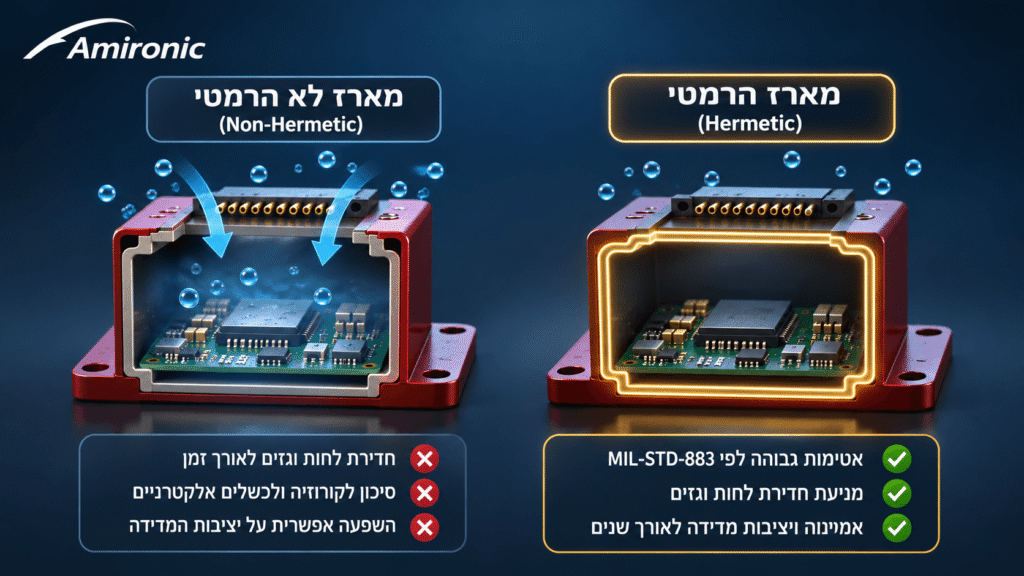
While IP ratings focus on protection against the ingress of solid particles and water under defined test conditions, hermetic sealing focuses on limiting gas leakage through the package boundaries using dedicated test methods and acceptance criteria.

2.1 What Does IP67 Actually Guarantee?

The IEC 60529 standard defines enclosure protection ratings using two digits.

For IP67:

  • The first digit, 6, indicates dust-tight protection under the specified test conditions.

  • The second digit, 7, indicates protection against harmful water ingress during temporary immersion under defined test conditions.

This rating is suitable for a wide range of industrial systems, outdoor equipment, sensors, and electronic assemblies exposed to dust and water.

However, understanding its limitations is essential.

IP67 testing is not designed to measure extremely small gas leak rates through an enclosure, nor does it provide quantitative information about water vapor transmission over several years.

Consequently, even when liquid water cannot directly enter an enclosure, there is no guarantee that its internal environment will remain unchanged throughout the product’s service life.

2.2 What Is Hermetic Sealing?

Hermetic sealing is a packaging approach designed to limit gas transmission through the package boundaries to a low, specified level.

Depending on the design, hermetically sealed electronic packages may incorporate materials and technologies such as:

  • Metal enclosures with welded joints.

  • Glass-to-metal seals.

  • Hermetic electrical feedthroughs.

  • Ceramic packages with sealed joints.

  • Specialized soldering, brazing, and sealing processes for electronic packages.

The objective is to establish a stable sealing boundary around internal components while minimizing potential leakage paths.

However, hermetic sealing does not imply absolutely zero leakage. From an engineering perspective, hermeticity is defined through allowable leak rates, specified test conditions, and acceptance criteria.

The lower the measured leak rate, the smaller the amount of gas passing through leakage paths under the specified measurement conditions.

It is important to emphasize that a low leak rate does not automatically translate into a specific service life. Evaluating long-term moisture ingress risks also requires considering the package’s internal volume, environmental conditions, gas composition, and material properties.

2.3 Engineering Comparison – IP67 vs. Hermetic Sealing

Parameter IP67 Hermetic Sealing
Applicable standard IEC 60529 MIL-STD-883, for example
Primary objective Protection against dust and water ingress Limiting gas leakage
Water immersion testing Yes Not necessarily
Gas leak-rate measurement No Yes, depending on the test method
Long-term water vapor ingress control Not quantitatively specified May be significantly improved, depending on package design and materials
Typical test method Dust and water immersion tests Helium Fine Leak Test
Typical applications Outdoor and industrial equipment High-reliability electronic components

The key engineering conclusion is that IP67 and hermetic sealing are not competing ratings on the same scale.

A system may require both, depending on its operating environment and reliability requirements.

For example, the external enclosure of a military system may need to withstand rain, dust, and temporary immersion, while the inertial sensor installed inside it may use a hermetically sealed package to protect its internal components against long-term moisture exposure.

2.4 Why Is This Distinction Particularly Important in Military Applications?

Consider a stabilized electro-optical system installed on an Unmanned Aerial Vehicle (UAV).

During operation, the system may experience low temperatures at high altitude and significantly higher temperatures on the ground. It may also be exposed to humidity, rain, vibration, and repeated power cycling.

An external enclosure rated IP67 can help prevent water from entering the assembly.

However, if the system contains a gyroscope with a non-hermetic package, gradual moisture ingress into the sensor’s internal enclosure may still occur, depending on its construction and sealing methods.

Over time, this exposure may increase the risk of corrosion and electrical failures and, in certain cases, indirectly affect measurement stability.

In a stabilization system, unexpected changes in the gyroscope output may degrade control performance, particularly when high angular stability is required.

Therefore, when designing advanced defense systems, sealing requirements should be evaluated not only at the external system level but also at the inertial sensor package level.

3. MIL-STD-883 – How Is Hermeticity Tested in Electronic Packages?

When high-reliability hermetic sealing is required, MIL-STD-883 is one of the established testing frameworks used in the microelectronics industry.

This standard includes a wide range of test methods intended to evaluate the quality, reliability, and environmental robustness of microelectronic devices.

In the context of hermetic sealing, one of the key methods is MIL-STD-883 Method 1014 – Seal.

This method addresses package seal integrity through testing techniques capable of detecting different levels of leakage.

It is important to emphasize that MIL-STD-883 is not a general enclosure protection rating like IP67. Demonstrating compliance requires identifying the applicable test method, test conditions, and acceptance criteria.

3.1 Gross Leak Testing

Gross Leak Testing is intended to identify relatively large leakage paths in a package.

Such leakage may result from mechanical joint defects, cracks, welding imperfections, or failures in the sealing process.

Different testing techniques may be used depending on the package design and the applicable revision of the standard.

The purpose of Gross Leak Testing is to verify that the package does not contain significant defects that allow gases or liquids to pass through at relatively high rates.

However, successfully passing a Gross Leak Test does not necessarily demonstrate compliance with the more stringent hermeticity requirements associated with detecting extremely small leaks.

3.2 Fine Leak Testing

Fine Leak Testing is designed to detect much smaller leaks that may not be identified through conventional sealing tests.

One commonly used technique involves exposing the package to helium gas under specified pressure and time conditions. Following exposure, helium escaping from the package is measured using a highly sensitive leak detector.

Other helium-based testing techniques may also be used, depending on the package design and applicable standard requirements.

Helium is particularly suitable for these tests because of its physical properties and the high detection sensitivity achievable with specialized leak detection equipment.

An important distinction must be made between the actual measured leak rate and the calculated equivalent leak rate under reference conditions, depending on the testing method.

Interpretation of the results depends on several factors, including the package’s internal volume, exposure pressure, exposure duration, and the time elapsed between exposure and measurement.

3.3 What Does a Leak Rate of 1 × 10⁻⁹ atm·cm³/s Mean?

As part of its introduction of new hermetic packaging solutions, Gladiator Technologies specifies a hermetic leak rate of:

1 × 10⁻⁹ atm·cm³/s

Manufacturer-stated hermetic leak rate

The unit atm·cm³/s expresses gas leak rate as pressure multiplied by volume per unit of time.

For illustration, a leak rate of 1 × 10⁻⁹ atm·cm³/s represents a gas throughput expressed as pressure-volume per unit time, under specified reference conditions.

This represents an exceptionally low leak rate.

However, this value should not be interpreted as a direct measurement of how much water will enter the package over one year, nor can it independently determine the expected service life of the sensor.

The relationship between helium leak rate and actual moisture ingress depends on additional factors, including package construction, internal volume, environmental conditions, and differences in the transport properties of various gases.

3.4 Why Is This Level of Hermeticity Important for IMUs and Gyroscopes?

In advanced inertial systems, maintaining measurement stability over time can be just as important as the sensor’s performance when it first leaves the factory.

A gyroscope may demonstrate excellent noise and stability characteristics under laboratory conditions, yet the system in which it is installed may be required to operate for years under changing environmental conditions.

A hermetic package with an exceptionally low leak rate helps minimize one potential pathway through which moisture and external gases could reach sensitive internal components.

This may contribute to long-term reliability, particularly when combined with appropriate thermal design, material selection, controlled manufacturing processes, and environmental qualification testing.

This is the significance of the development introduced by Gladiator Technologies: expanding the design options available to engineers who require advanced inertial measurement performance together with packaging solutions intended to meet stringent hermeticity requirements.

4. Why Is Hermetic Sealing Particularly Important in Military and Defense Systems?

In advanced military systems, inertial sensor reliability is not measured solely by the ability to deliver accurate data under laboratory conditions. It is also evaluated by the sensor’s ability to maintain reliable operation after extended storage, exposure to changing environmental conditions, and operation in demanding environments.

Inertial Measurement Units (IMUs) and gyroscopes are used in systems where motion and angular velocity measurements play a critical role in navigation, stabilization, and control.

In these applications, moisture ingress into the sensor package may initiate gradual failure mechanisms that are not necessarily detected during initial product acceptance testing.

Hermetic sealing at the package level provides an additional layer of protection designed to reduce the risk of gas and moisture ingress into internal components throughout the system’s service life.

4.1 Guidance Systems and Missiles – Reliability After Years of Storage

Guidance systems integrated into missiles and precision-guided munitions may remain in storage for years before deployment.

During this period, they may experience temperature cycling, humidity variations, and changing storage conditions.

Unlike industrial systems that operate continuously and undergo periodic maintenance, some defense systems offer limited opportunities to inspect or replace internal components once assembly is complete.

In these applications, inertial sensors may measure angular velocity, acceleration, and motion as part of guidance, stabilization, and control systems.

Gradual moisture ingress into an electronic package may increase the risk of corrosion, deterioration of electrical connections, and failures developing during storage.

A hermetic package with a low leak rate can help reduce moisture ingress through the package boundaries, contributing to the long-term reliability of internal components.

In this context, Gladiator Technologies’ LandMark 007 family is designed for high-dynamic inertial applications, including guidance and short-term navigation systems.

The introduction of a hermetic packaging option for this family enables engineers to combine the sensor’s measurement capabilities with more stringent package-level environmental protection requirements.

It is important to emphasize that hermetic sealing does not replace storage qualification, shock testing, vibration testing, aging assessments, or system-level reliability verification. It is an additional design element intended to address long-term environmental reliability requirements.

4.2 EO/IR Systems – Maintaining Stabilization Reliability

Electro-Optical/Infrared (EO/IR) systems are used for observation, detection, tracking, and line-of-sight stabilization across a wide range of military platforms.

These systems may be installed on UAVs, helicopters, armored vehicles, and stationary surveillance platforms.

Gyroscopes measure angular velocity and provide feedback to control systems that compensate for platform motion.

Unexpected changes in sensor output, such as variations in gyroscope bias, may degrade stabilization performance, depending on the control system architecture and its compensation capabilities.

EO/IR systems may operate in environments characterized by high humidity, rain, temperature fluctuations, and prolonged outdoor exposure.

Even when the electro-optical assembly itself is protected by a sealed external enclosure, protecting the internal sensors remains important.

A hermetically sealed gyroscope package helps minimize potential exposure of internal components to moisture and gases, potentially reducing environmental failure risks over time.

Gladiator Technologies’ G300D family includes digital triaxial gyroscopes used in precision stabilization applications.

The introduction of a new hermetic packaging option for this family expands the choices available to EO/IR system engineers who must balance measurement performance with environmental reliability requirements.

4.3 Unmanned Aerial Vehicles – Temperature Cycling and Humidity

Unmanned Aerial Vehicles (UAVs) frequently operate under highly variable environmental conditions.

During a single mission, a system may experience elevated temperatures on the ground, low temperatures at altitude, and changes in atmospheric pressure and humidity throughout the flight.

After landing, exposure to warm, humid conditions may promote condensation, particularly when moisture is already present inside electronic assemblies.

IMUs are used in UAVs to measure acceleration and angular velocity, supporting flight control, navigation, and payload stabilization systems.

In these applications, maintaining sensor reliability over repeated operating cycles is a key engineering consideration.

Hermetic packaging may help reduce the risk of moisture reaching internal components, particularly when the system must operate for extended periods under changing environmental conditions.

Gladiator Technologies’ LandMark 005 family is designed for applications including flight control, stabilization, and short-term navigation.

The availability of a new hermetic packaging option for this family may be particularly relevant to unmanned systems requiring high environmental reliability while maintaining strict Size, Weight, and Power (SWaP) constraints.

4.4 Naval Systems – High Humidity and Corrosive Environments

Military systems installed aboard ships and other naval platforms operate in environments characterized by high humidity and potential exposure to salt and corrosive substances.

Even when an inertial sensor is installed inside a protected assembly, environmental conditions may affect component reliability over time.

In naval applications, gyroscopes and IMUs may be used for observation system stabilization, motion measurement, stabilized platform control, and navigation.

Hermetic sealing at the sensor package level may reduce the risk of moisture and gas ingress through the package boundaries.

However, it is important to distinguish hermetic sealing from external corrosion resistance. Even a hermetically sealed package may require additional corrosion protection, depending on its materials and installation environment.

4.5 Ground-Based Systems – Reliability Under Dust, Humidity, and Temperature Variations

In military vehicles, stabilized turret systems, and ground-based surveillance platforms, inertial sensors may be exposed to harsh environmental conditions for extended periods.

A system may operate at high temperatures during the day, cool significantly at night, and experience humidity, dust, and mechanical vibration.

In these applications, hermetic sealing is not intended to replace the system’s external protection against dust and water.

Instead, it provides additional protection at the sensor package level, helping reduce moisture ingress and environmental failure mechanisms affecting internal electronic components.

Combining suitable external environmental protection, hermetically sealed sensor packages, and appropriate environmental testing may contribute to overall system reliability throughout its intended service life.

5. Hermetic Sealing Does Not Guarantee Higher Accuracy – But It Can Help Maintain Sensor Reliability

One of the most important distinctions when selecting inertial sensors is the difference between sensor measurement performance and the environmental reliability of its package.

Hermetic sealing does not directly reduce measurement noise, automatically improve Bias Stability, or increase sensor Bandwidth.

These parameters are primarily determined by sensor design, MEMS technology, electronic circuitry, calibration processes, and signal processing algorithms.

However, hermetic sealing may help reduce environmental influences that could compromise the long-term reliability of internal components.

5.1 Potential Effects of Moisture Ingress

Moisture entering a non-hermetic electronic package may contribute to several failure mechanisms.

Corrosion of Conductors and Electrical Connections

Moisture, combined with suitable contaminants, may promote corrosion of conductors, contacts, and electrical connections.

Electrical Leakage Currents

Under certain conditions, moisture accumulating on insulating surfaces may increase electrical leakage currents and alter the behavior of sensitive electronic circuits.

Condensation Inside the Package

When moisture is present inside an enclosed cavity, temperature changes may create conditions in which water vapor condenses on colder surfaces.

Reduced Long-Term Reliability

Repeated moisture exposure may accelerate certain aging and failure mechanisms, depending on the materials and construction of the assembly.

In inertial sensors, these failure mechanisms may lead to changes in measurement signals, communication errors, or complete loss of functionality.

However, moisture ingress does not necessarily result in degraded measurement performance in every case. Its impact depends on the sensor architecture and the specific failure mechanism involved.

5.2 The Engineering Advantage of Hermetic Packaging

A hermetic package is designed to limit gas transmission through its boundaries to a specified, low level.

When properly designed, manufactured, and tested against appropriate requirements, it may reduce the long-term exposure of internal components to external moisture.

For military systems, this offers an opportunity to reduce one of the environmental risk factors affecting sensor reliability, particularly in applications requiring extended service life or offering limited maintenance access.

The primary advantage of hermetic sealing is not an immediate improvement in measurement accuracy, but a reduction in environmental failure risks that could affect sensor reliability throughout the system’s service life.

In this context, the development of new hermetic packaging solutions by Gladiator Technologies represents an important advancement for engineers seeking inertial sensing solutions for high-reliability applications.

6. Gladiator Technologies’ New Hermetic Packages – Combining Inertial Performance with Environmental Reliability

Gladiator Technologies, a manufacturer specializing in MEMS-based inertial sensors, is expanding its solutions for military and aerospace applications through the introduction of new hermetic packaging options for several key product families.

As part of its 2026 capabilities overview, the company announced hermetic packaging solutions for three product families:

  • G300D – A digital triaxial gyroscope.

  • LandMark 005 – A six-axis Inertial Measurement Unit (IMU).

  • LandMark 007 – An IMU designed for high-dynamic applications.

According to the manufacturer, the new hermetic packages offer a specified leak rate of 1 × 10⁻⁹ atm·cm³/s, with hermeticity requirements defined and qualified in accordance with MIL-STD-883.

This represents a significant expansion of the company’s product capabilities, enabling advanced inertial sensing technology to be combined with packaging designed to meet stringent environmental sealing requirements.

It is important to note that the manufacturer’s statement refers specifically to the new hermetic package configurations. It should not be assumed that every existing version within these product families provides the same level of hermeticity as standard.

6.1 G300D – Triaxial Gyroscope with a Hermetic Packaging Option

Gladiator Technologies’ G300D family includes digital triaxial gyroscopes based on MEMS technology.

A triaxial gyroscope measures angular velocity around three axes, enabling control and stabilization systems to detect rotational motion and apply the necessary corrections.

These sensors are used in applications such as stabilized electro-optical systems, tracking platforms, guidance systems, and other applications requiring continuous angular velocity measurements.

In military systems, a gyroscope may be installed inside an assembly that is not readily accessible for routine maintenance. In some cases, it must maintain reliability throughout extended storage and operational periods.

The hermetic packaging option for the G300D family is intended to address these requirements by limiting gas transmission through the package boundaries.

The engineering advantage: System designers can select a triaxial gyroscope from the G300D family while considering not only measurement performance but also the hermeticity requirements of the application.

This may be particularly relevant to EO/IR stabilization systems, guidance platforms, and electronic assemblies intended to operate under changing environmental conditions.

6.2 LandMark 005 – IMU for Stabilization, Navigation, and Flight Control

The LandMark 005 family includes six-axis Inertial Measurement Units combining gyroscopes and accelerometers.

Unlike a gyroscope, which measures angular velocity alone, an IMU provides both angular velocity and linear acceleration measurements, making it an important component in navigation, stabilization, and control systems.

LandMark 005 is designed for applications requiring a combination of inertial measurement performance, compact dimensions, and integration capabilities within advanced systems.

Relevant applications include:

  • Flight control systems in Unmanned Aerial Vehicles (UAVs).

  • Electro-optical stabilization systems.

  • Short-term inertial navigation systems.

  • Military systems requiring acceleration and angular velocity measurements.

In these applications, the IMU may experience temperature cycling, pressure variations, and changing humidity conditions throughout its service life.

The addition of a hermetic packaging option to the LandMark 005 family enables system engineers to address the risk of moisture and gas ingress into internal electronic components.

This is particularly important in systems requiring long-term reliability while operating under Size, Weight, and Power (SWaP) constraints.

6.3 LandMark 007 – IMU for High-Dynamic Applications

The LandMark 007 family is designed for inertial applications involving highly dynamic motion, including guidance, navigation, and stabilization systems.

In these applications, the sensor may be required to measure motion under conditions involving high acceleration, significant angular velocities, and demanding mechanical environments.

Munition systems, guidance platforms, and highly dynamic military systems may incorporate IMUs as part of their navigation and control architectures.

In addition to demanding dynamic performance requirements, these applications may also require reliability after extended storage periods.

A system may remain in storage for several years before being required to operate under challenging conditions.

During storage, exposure to temperature cycling and humidity may increase the risk of gradual failure mechanisms in electronic components that are not adequately protected.

A hermetic package with a low leak rate may reduce moisture ingress through the package boundaries, helping protect sensitive internal components.

The availability of a hermetic packaging option for the LandMark 007 family complements its high-dynamic measurement capabilities and allows engineers to consider long-term environmental reliability as part of the sensor selection process.

6.4 What Does the New Hermeticity Level Mean for System Designers?

The engineering value of the new hermetic packages extends beyond the leak-rate specification itself.

It comes from the ability to address several design requirements within a single inertial sensing solution:

  • Inertial performance: Selecting a gyroscope or IMU according to the system’s measurement requirements.

  • Application suitability: Choosing a sensor family appropriate for stabilization, navigation, guidance, or control.

  • Environmental reliability: Incorporating a hermetic package designed to limit gas and moisture ingress.

  • System integration: Evaluating the sensor as part of a complete assembly that includes environmental protection, thermal management, power supply, and communication interfaces.

Rather than treating hermeticity as a secondary packaging characteristic, engineers can incorporate it into the system requirements from the earliest design stages.

This approach is particularly important in defense projects where long-term reliability, operational availability, and failure risk reduction are essential design considerations.

6.5 What Should Engineers Verify Before Selecting a Hermetic Configuration?

Despite the advantages of hermetic packaging, sensor selection should not rely solely on a general statement of “Hermetically Sealed.”

Before finalizing a design, engineers should verify the following with the manufacturer:

  • Configuration availability: Is the hermetic package available for the specific part number being considered?

  • Leak-rate specification: What is the specified leak rate, and under which measurement conditions is it defined?

  • Applicable test standard: Which MIL-STD-883 test method and revision are used to verify hermeticity?

  • Testing scope: Are hermeticity tests performed on every unit, or as part of qualification and sample-based testing?

  • Configuration differences: Are there mechanical or electrical differences between the standard and hermetic versions?

  • Additional environmental qualification: What other environmental tests have been performed on the specific configuration?

These distinctions are important because compliance with a particular hermeticity requirement does not automatically demonstrate compliance with every environmental or reliability requirement of the complete system.

Through its new hermetic packaging solutions, Gladiator Technologies expands the options available for designing high-reliability inertial systems, combining the measurement capabilities of its established sensor families with more stringent package-level hermeticity requirements.

7. Case Study – Hermetic Sealing in a UAV EO/IR Stabilized Payload

7.1 Operational Scenario – A Stabilized Payload Operating Under Changing Environmental Conditions

Consider a hypothetical military Unmanned Aerial Vehicle (UAV) equipped with a stabilized Electro-Optical/Infrared (EO/IR) payload designed for surveillance, observation, and target tracking.

The payload incorporates a precision stabilization system that uses gyroscope feedback to compensate for aircraft motion and maintain a stable line of sight.

A digital triaxial gyroscope, such as the Gladiator Technologies G300D, may be considered for measuring angular velocity around three axes and providing feedback to the stabilization controller.

During its operational life, the payload may experience:

  • High temperatures on the ground: Prolonged exposure to direct sunlight and elevated ambient temperatures before takeoff.

  • Low temperatures at altitude: Significant temperature changes as the UAV climbs to its operating altitude.

  • Humidity and condensation risks: Exposure to humid environments and repeated temperature transitions during deployment and recovery.

  • Mechanical vibration: Continuous vibration generated by the aircraft propulsion system and aerodynamic disturbances.

  • Repeated operational cycles: Frequent takeoffs, landings, power cycling, and periods of storage between missions.

Although the payload’s external enclosure may provide IP67 protection against dust and temporary water immersion, this does not necessarily establish the hermeticity of the gyroscope package installed inside it.

7.2 The Engineering Challenge – Protecting the Gyroscope Over Its Service Life

The stabilization controller relies on consistent angular velocity measurements to compensate for disturbances affecting the UAV and its payload.

If the gyroscope output experiences unexpected changes, such as bias drift or intermittent electrical faults, stabilization performance may be affected depending on the control architecture and its compensation capabilities.

However, not all changes in gyroscope output are caused by environmental degradation. Temperature sensitivity, mechanical stress, calibration errors, and other factors may also influence measurement performance.

The specific environmental concern in this scenario is gradual moisture ingress into the gyroscope’s electronic package.

Even when the external EO/IR payload enclosure prevents liquid water ingress, a non-hermetic sensor package may still allow gases or water vapor to enter through microscopic leakage paths over time.

Under certain conditions, moisture exposure may contribute to corrosion, electrical leakage currents, degradation of internal connections, or other failure mechanisms.

These effects may develop gradually and may not be detected during initial acceptance testing.

7.3 The Proposed Approach – Combining IP67 Protection with Hermetic Sensor Packaging

Rather than treating environmental protection as a single enclosure-level requirement, the engineering team evaluates protection at two separate levels.

Level 1 – External EO/IR Payload Enclosure

The external enclosure is designed to meet the applicable IP67 requirements, helping protect the complete payload against dust and temporary water immersion under specified test conditions.

Level 2 – Internal Gyroscope Package

The engineering team considers a hermetically packaged G300D gyroscope to reduce the potential for moisture and gas ingress into the sensor’s internal electronic environment.

According to Gladiator Technologies, its new hermetic packaging solutions offer a specified leak rate of:

1 × 10⁻⁹ atm·cm³/s

The manufacturer states that the hermeticity requirements are defined and qualified in accordance with MIL-STD-883.

The engineering team would need to confirm that this specification applies to the exact G300D configuration under consideration and review the relevant test documentation.

The two protection approaches serve complementary purposes:

  • IP67 addresses external dust and water ingress under defined test conditions.

  • Hermetic sealing addresses gas leakage through the sensor package boundaries.

  • Neither approach replaces appropriate thermal design, vibration qualification, or system-level reliability testing.

7.4 Engineering Evaluation – What Should Be Verified?

Before selecting the hermetic gyroscope configuration, the engineering team should evaluate several factors.

Evaluation Area Engineering Consideration
Gyroscope performance Verify angular rate range, noise, bias stability, bandwidth, and latency against stabilization requirements
Hermeticity Confirm the specified leak rate and applicable MIL-STD-883 test method
Temperature performance Evaluate measurement behavior and reliability across the required operating and storage temperature ranges
Vibration and shock Verify mechanical survivability and measurement performance under representative operating conditions
Electrical integration Confirm interfaces, power requirements, and compatibility with the stabilization controller
Environmental qualification Evaluate the complete payload under relevant temperature, humidity, vibration, and operational cycling conditions
Long-term reliability Assess storage conditions, maintenance intervals, and potential environmental failure mechanisms

Importantly, selecting a hermetically sealed gyroscope does not eliminate the need to characterize its measurement performance under changing temperatures and mechanical disturbances.

Hermetic sealing primarily addresses package integrity and environmental exposure, rather than directly improving the gyroscope’s inherent measurement accuracy.

7.5 Engineering Conclusion – Two Levels of Protection, One Reliability Strategy

In this illustrative UAV EO/IR payload application, the value of hermetic sealing lies in addressing an environmental reliability risk that external IP67 protection alone does not fully characterize.

The external enclosure protects the payload assembly against defined dust and water exposure, while the hermetic gyroscope package provides an additional barrier against gas and moisture ingress into sensitive internal components.

For a stabilization system expected to operate over an extended service life, this layered approach may help reduce environmental failure risks and support long-term operational reliability.

The key takeaway: A stabilized EO/IR payload may require both external environmental protection and package-level hermeticity. These are complementary engineering requirements, not interchangeable specifications.

This case study is a hypothetical engineering example intended to illustrate sensor selection considerations. It does not represent a disclosed customer program, a verified G300D installation, or measured performance improvements resulting from hermetic packaging.

8. Rules of Thumb for Selecting a Gyroscope or IMU with Hermetic Packaging

Selecting an inertial sensor for a military or aerospace system requires consideration of both measurement performance and the environmental conditions in which the sensor will operate.

The following rules of thumb can help system engineers during the requirements definition stage.

8.1 Define the Required Service Life and Storage Conditions

When a system is expected to operate for many years or remain in extended storage before deployment, engineers should evaluate whether hermetic sensor packaging is required.

This is particularly important in guidance systems, defense electronics, and assemblies where maintenance access is limited.

8.2 Do Not Rely Solely on the External System’s IP Rating

Even when the assembly containing the sensor meets dust and water protection requirements, this does not mean that the internal sensor package is hermetically sealed.

The hermeticity of the sensor package and the environmental conditions inside the surrounding assembly should be evaluated separately.

8.3 Request a Quantitative Hermeticity Specification

A general statement such as “Hermetically Sealed” may not provide sufficient information for design approval.

Engineers should request the specified leak rate, measurement units, test conditions, and acceptance criteria from the manufacturer.

For example, Gladiator Technologies specifies a hermetic leak rate of 1 × 10⁻⁹ atm·cm³/s for its new G300D, LandMark 005, and LandMark 007 hermetic packages.

8.4 Verify the Applicable Test Method

When MIL-STD-883 compliance is required, engineers should verify the specific test method, standard revision, and acceptance criteria.

In particular, it is important to distinguish between Fine Leak and Gross Leak testing and confirm that the selected methods are appropriate for the package characteristics.

8.5 Verify the Exact Configuration, Not Just the Product Family

Do not assume that every version of a gyroscope or IMU is supplied with hermetic packaging.

When selecting a product, confirm that the requested part number includes the required hermetic configuration.

8.6 Do Not Substitute Hermetic Sealing for Environmental Qualification

A hermetic package does not automatically guarantee resistance to shock, vibration, temperature variations, or external corrosion.

System environmental requirements and the corresponding qualification tests must be evaluated separately.

8.7 Include Hermeticity Requirements Early in the Design Process

Introducing a hermetic sealing requirement late in a project may require changes to the sensor configuration, mechanical dimensions, interfaces, or qualification process.

Therefore, hermeticity requirements should be defined during the initial inertial sensor selection stage.

9. Conclusion – Hermetic Sealing as Part of Inertial System Reliability Engineering

In advanced military, aerospace, and industrial systems, selecting an inertial sensor involves more than evaluating measurement accuracy, noise, bandwidth, or bias stability.

Long-term system reliability also depends on the sensor’s ability to withstand the environmental conditions in which it operates.

IP ratings, such as IP67, provide valuable information about protection against dust and water ingress under defined test conditions. However, they are not a substitute for hermeticity testing, which is intended to measure and limit gas leakage through the package boundaries.

Hermetic sealing with a low leak rate may reduce the risk of moisture ingress into internal components, potentially contributing to the long-term reliability of gyroscopes and IMUs.

This is particularly important in guidance systems, electro-optical stabilization platforms, UAVs, and military systems expected to operate after extended storage periods.

Gladiator Technologies is expanding its capabilities in this area through new hermetic packaging options for the G300D, LandMark 005, and LandMark 007 product families, with a stated hermetic leak rate of 1 × 10⁻⁹ atm·cm³/s and hermeticity requirements aligned with MIL-STD-883.

This development allows system engineers to evaluate inertial sensing solutions that combine advanced measurement performance with more stringent environmental sealing requirements.

Amironic Ltd., the Israeli representative of Gladiator Technologies, assists customers in selecting gyroscopes, IMUs, and inertial sensors according to their application requirements, including measurement performance, environmental conditions, interfaces, and reliability considerations.

10. Frequently Asked Questions (FAQ)

What is the difference between IP67 and hermetic sealing?

IP67 is a dust and water ingress protection rating defined by IEC 60529. Hermetic sealing refers to limiting gas leakage through package boundaries and is evaluated using dedicated test methods, such as those specified in MIL-STD-883. IP67 compliance does not demonstrate that a package is hermetically sealed.

Does an IP67-rated IMU provide long-term protection against moisture?

Not necessarily. IP67 does not provide a quantitative measurement of water vapor transmission over time. Evaluating long-term moisture protection requires consideration of package construction, materials, environmental conditions, and sealing requirements.

What is hermetic sealing in an inertial sensor?

Hermetic sealing is a package characteristic designed to limit gas transmission through its boundaries to a specified, low level. In inertial sensors, its purpose is to reduce potential exposure of internal components to moisture and external gases.

What is MIL-STD-883?

MIL-STD-883 is a standard containing test methods for microelectronic devices. In the context of hermetic sealing, Method 1014 addresses package seal integrity testing, including methods for detecting gas leakage.

What is a Helium Leak Test?

A Helium Leak Test uses helium gas and sensitive measurement equipment to detect extremely small leaks in electronic packages. The test enables hermeticity to be evaluated according to specified measurement conditions and the selected test method.

What does a hermeticity level of 1 × 10⁻⁹ atm·cm³/s mean?

It represents an exceptionally low gas leak rate, expressed as pressure multiplied by volume per unit of time. The value is used to specify hermeticity, but it cannot independently determine how much moisture will enter a package over several years or establish the sensor’s expected service life.

Does hermetic sealing improve gyroscope accuracy?

Not directly. Hermetic sealing does not automatically improve parameters such as Angle Random Walk (ARW), Bias Stability, or Bandwidth. However, it may reduce environmental failure risks that could affect sensor reliability over time.

Why is hermetic sealing important in guidance systems and missiles?

These systems may remain in storage for years before deployment, with limited access for maintenance. Hermetic sealing may reduce the risk of moisture entering the sensor package during storage and throughout its service life.

Are all Gladiator Technologies IMUs hermetically sealed?

Not necessarily. Gladiator Technologies has announced new hermetic packaging options for the G300D, LandMark 005, and LandMark 007 product families. Availability and the applicable hermeticity specification should be confirmed with the manufacturer for the exact part number.

Does hermetic packaging replace shock and vibration testing?

No. Hermetic sealing and mechanical qualification address different characteristics. A hermetically sealed sensor may still require shock, vibration, temperature, and other environmental tests depending on the application.

Can a hermetically sealed gyroscope be used in an EO/IR system?

Yes. Gyroscopes with hermetic packaging may be suitable for electro-optical stabilization systems, provided they meet the application’s measurement, interface, and environmental requirements. Hermetic sealing provides an additional means of reducing environmental exposure risks.

How do I choose between G300D, LandMark 005, and LandMark 007?

The selection depends on the application requirements. G300D is a triaxial gyroscope for angular velocity measurement; LandMark 005 is an IMU combining acceleration and angular velocity measurements; and LandMark 007 is designed for high-dynamic applications. Hermetic packaging requirements should be evaluated alongside the performance specifications of each product family.

11. Technical Glossary

Term Definition
Hermetic Sealing Limiting gas transmission through package boundaries to a specified, low level.
Hermeticity A measure of package sealing integrity, typically characterized by gas leak rate.
IP67 An enclosure protection rating for dust-tight construction and temporary water immersion, according to IEC 60529.
MIL-STD-883 A standard containing test methods for microelectronic devices, including package sealing tests.
Method 1014 A MIL-STD-883 test method used to evaluate package seal integrity.
Helium Leak Test A leakage test using helium gas and sensitive detection equipment.
Fine Leak A test intended to detect extremely small gas leaks.
Gross Leak A test intended to identify relatively large leakage paths.
Leak Rate The rate of gas flow through a leakage path, commonly expressed as pressure multiplied by volume per unit of time under specified conditions.
atm·cm³/s A leak-rate unit representing pressure multiplied by volume per unit of time.
Permeation The transmission of gases or water vapor through a material by processes involving solubility and diffusion.
Condensation The transition of water vapor into liquid water under suitable thermodynamic conditions.
Corrosion The deterioration of a material through chemical or electrochemical reactions with its environment.
MEMS Micro-Electro-Mechanical Systems – microscopic mechanical and electronic structures used in motion sensors and other devices.
IMU Inertial Measurement Unit – a device typically combining gyroscopes and accelerometers.
Gyroscope A sensor used to measure angular velocity.
Accelerometer A sensor used to measure acceleration.
Bias Stability A measure of changes in a sensor’s measurement bias over time.
ARW Angle Random Walk – a measure of gyroscope noise that contributes to accumulated angular error.
EO/IR Electro-Optical/Infrared – imaging and sensing systems operating in optical and infrared spectral bands.
SWaP Size, Weight, and Power – key physical and electrical constraints in system design.
Hermetic Feedthrough An electrical feedthrough that provides connectivity across a package boundary while maintaining its hermetic seal.
Tags: Gladiator_Technologies

Related Articles

How Do Shock and Vibration Affect IMU Measurement Accuracy?

03/11/2026amironicLTD

Why a Smaller IMU Can Save Months of Development

30/06/2026amironicLTD

Scale Factor in MEMS IMUs – The Error That Quietly Destroys Accuracy

11/05/2026amironicLTD

Recent Posts

  • Hermetic Sealing in Inertial Sensors – What Is the Difference Between IP67 and MIL-STD-883?
  • Pneumatic Switches for Wet Environments – Operating Principles, Electrical Separation, and Applications in Pools, Spas, and Humid Environments
  • How Do Shock and Vibration Affect IMU Measurement Accuracy?
  • Industrial Footswitches – How to Select the Right Footswitch for Your Application
  • Open-Loop vs. Closed-Loop Accelerometers – Which Technology Is Right for Your Application?

Categories

  • Air Switch
  • Circuit Breakers
  • Elapsed Time Indicator
  • Feedthrough
  • Footswitches
  • Gears & Transmission
  • Hour Meters
  • Infra Red Switches
  • INFRARED LAMPS
  • Low Noise Inertial MEMS
  • Mechanics
  • MEMS Gyroscope
  • MEMS Inertial
  • Microelectronics
  • Motors
  • Position Sensors
  • Power Supply
  • Pressure Sensors
  • Pressure Switch
  • Sealing
  • Switches
  • Temperature Sensors
  • Tungsten and Molybdenum
  • Uncategorized
  • Vacuum Switches

Quick Contact

Fill out the form and our representatives will return to you

    Name (required)

    Email (required)

    Phone

    Message

    This site is protected by reCAPTCHA and the Google
    Privacy Policy and
    Terms of Service apply.

    Amironic Ltd.

    3 Rabinovich Street, Petah Tikva 4928144 , Israel. Tel: +972-3-9047744 E-mail: office@amironic.co.il
    Email
    Facebook
    Twitter
    LinkedIn
    YouTube
    Press on the ISO Certificate below for download
    ISO 9001:2015 Certification
    • MEMS Inertial
    • Circuit Breakers
    • Footswitches
    • Mechanical & Transmissions
    • Sensors
    • Motors
    • Electronics
    • Hand Control
    • Power Solutions

    News

    • Hermetic Sealing in Inertial Sensors – What Is the Difference Between IP67 and MIL-STD-883?
    • Pneumatic Switches for Wet Environments – Operating Principles, Electrical Separation, and Applications in Pools, Spas, and Humid Environments
    • How Do Shock and Vibration Affect IMU Measurement Accuracy?
    • Industrial Footswitches – How to Select the Right Footswitch for Your Application
    • Open-Loop vs. Closed-Loop Accelerometers – Which Technology Is Right for Your Application?
    About AmironicContactעברית
    © 2022 Amironic All rights reserved. All Trademarks are the property of their respective owners.
    • Increase Font
    • Decrease Font
    • Black & White
    • Inverse Colors
    • Highlight Links
    • Regular Font
    • Reset