A decade ago, the primary challenge was to build smarter systems.
Today, the challenge is to make all of them work together.
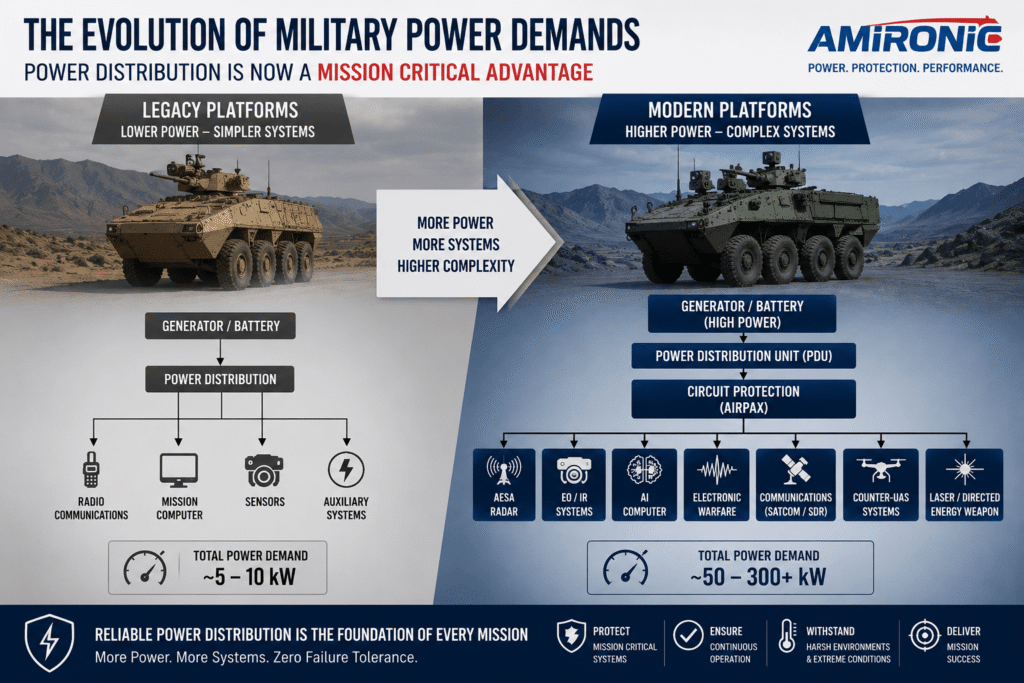
A modern combat vehicle may operate an AESA radar, electronic warfare systems, EO/IR sensors, AI computers, satellite communications, counter-UAS systems, and even directed-energy weapons at the same time.
But all of these systems have one thing in common.
They depend on the same power system.
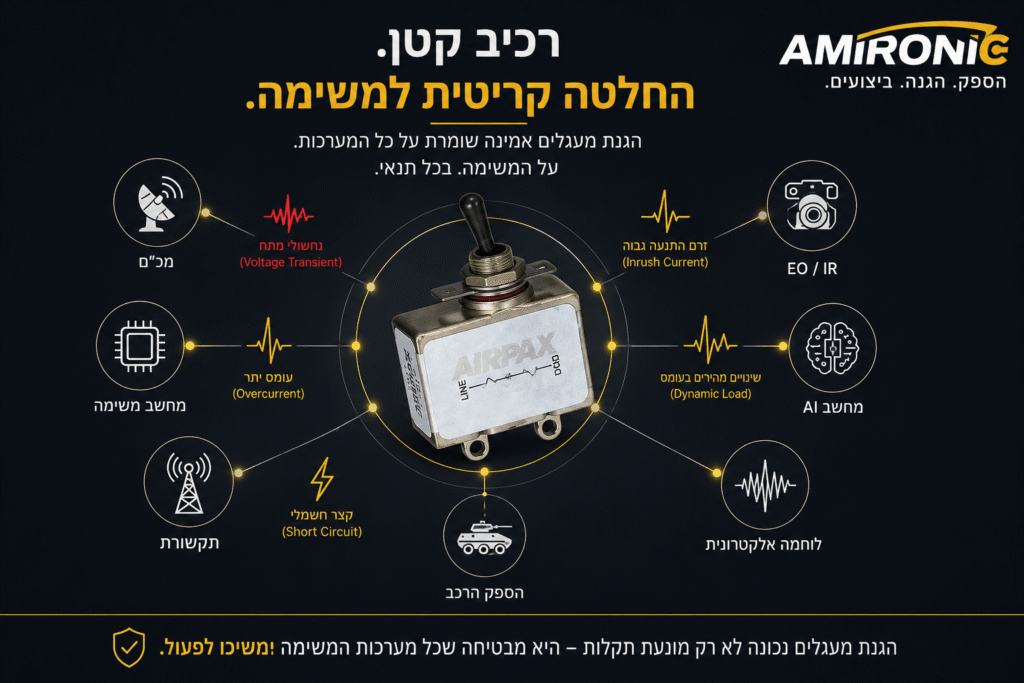
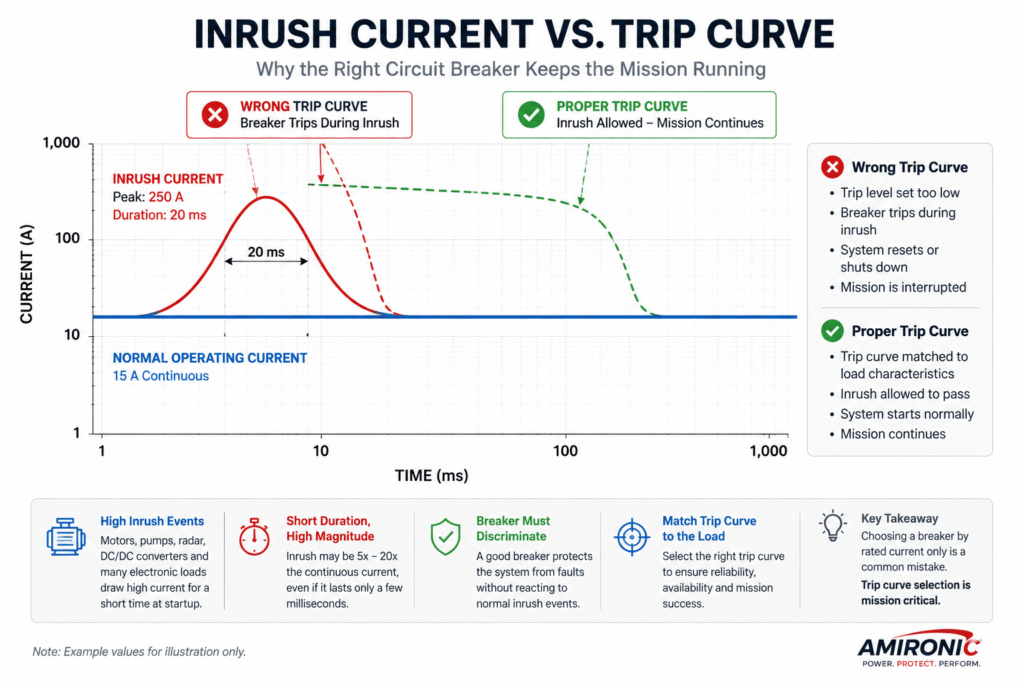
They compete for the same energy source, generate high inrush currents, remain sensitive to voltage drops, and must continue operating under vibration, shock, and extreme environmental conditions.
In other words, the battle is no longer taking place only between weapon systems.
It is also taking place inside the power distribution system.
More and more system engineers are discovering that the platform’s performance limit is not necessarily the processor, the radar, or the algorithm, but its ability to deliver stable, protected, and continuous power to every mission-critical system.
This is why Military Power Distribution has evolved in recent years from a quiet infrastructure challenge into one of the most important engineering disciplines in the design of modern military platforms.