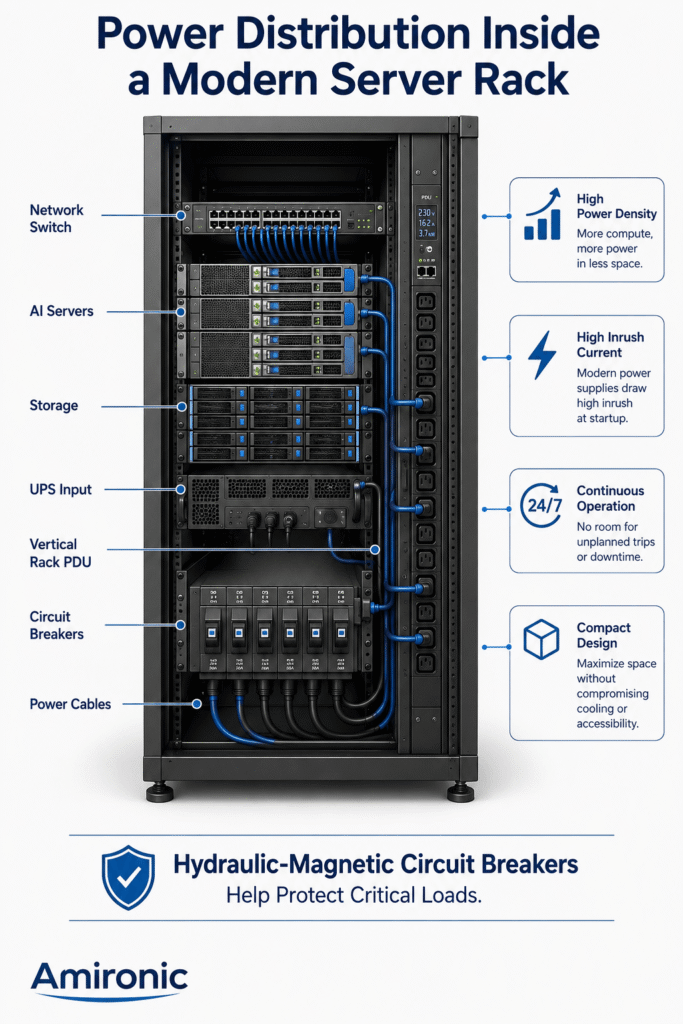
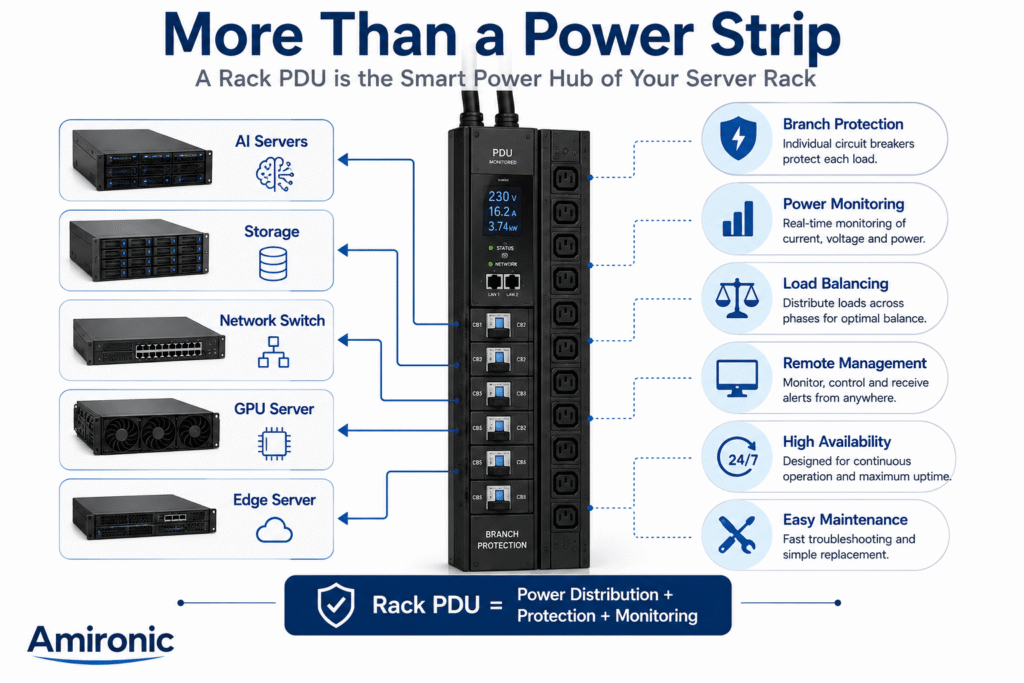
A modern AI server can consume more power than an entire server rack from a decade ago. Power density is increasing, inrush currents are becoming higher, cabinet temperatures continue to rise, and expectations for uptime are approaching 100%. This raises an important question: Is a standard thermal circuit breaker still the best choice, or is it time to consider a different protection technology?
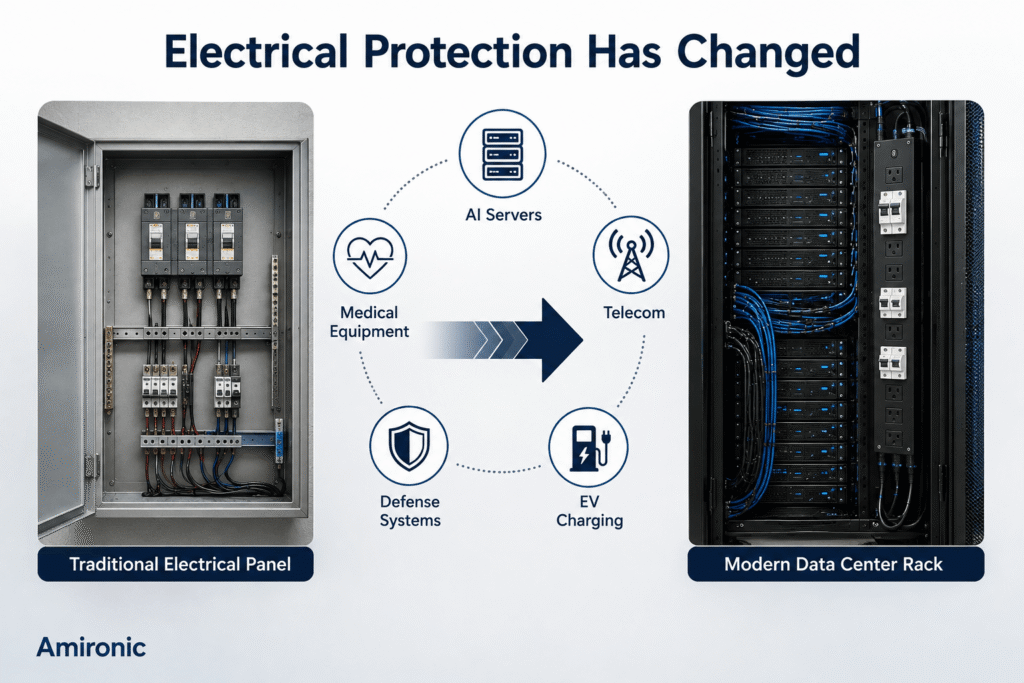
Twenty years ago, opening an electrical panel typically revealed thermal circuit breakers protecting motors, lighting circuits, or other relatively simple electrical loads. In most cases, selecting a circuit breaker came down to two basic parameters: operating voltage and rated current.
Today’s electrical systems are fundamentally different.
Data centers, AI servers, medical equipment, telecommunications infrastructure, military systems, and high-power EV charging equipment all operate in far more demanding electrical environments. Modern power supplies contain large capacitor banks that generate high inrush currents, often operate in elevated ambient temperatures, and must deliver exceptionally high system availability.
In these applications, selecting a circuit breaker based solely on its current rating is no longer enough.
System designers must now consider additional questions:
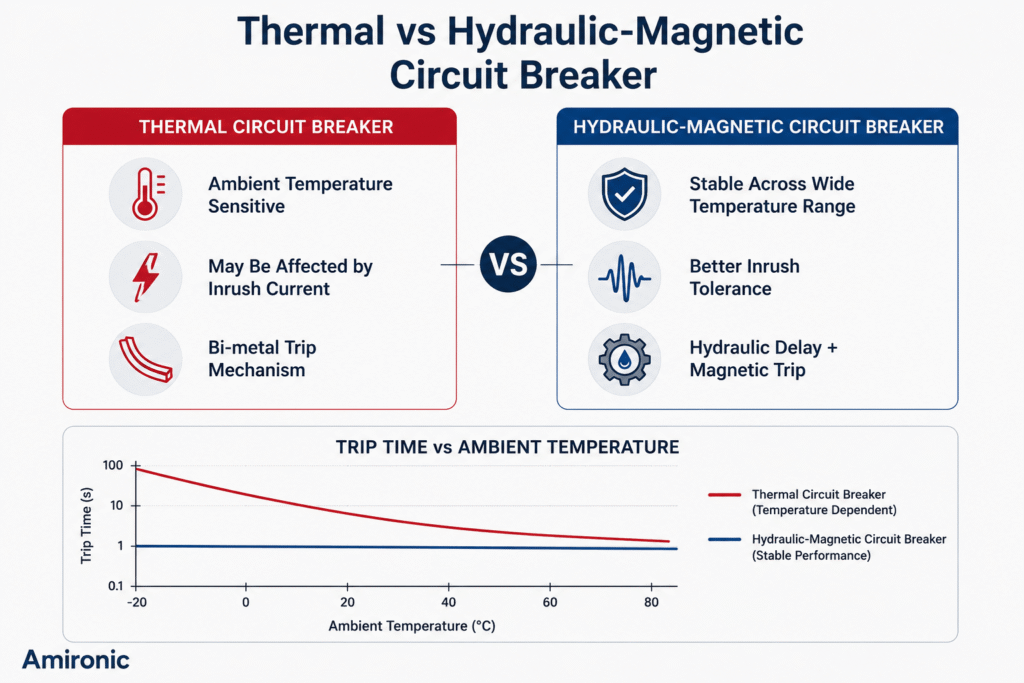
- Will the circuit breaker tolerate high inrush currents without causing nuisance trips?
- Will elevated ambient temperatures affect its trip characteristics?
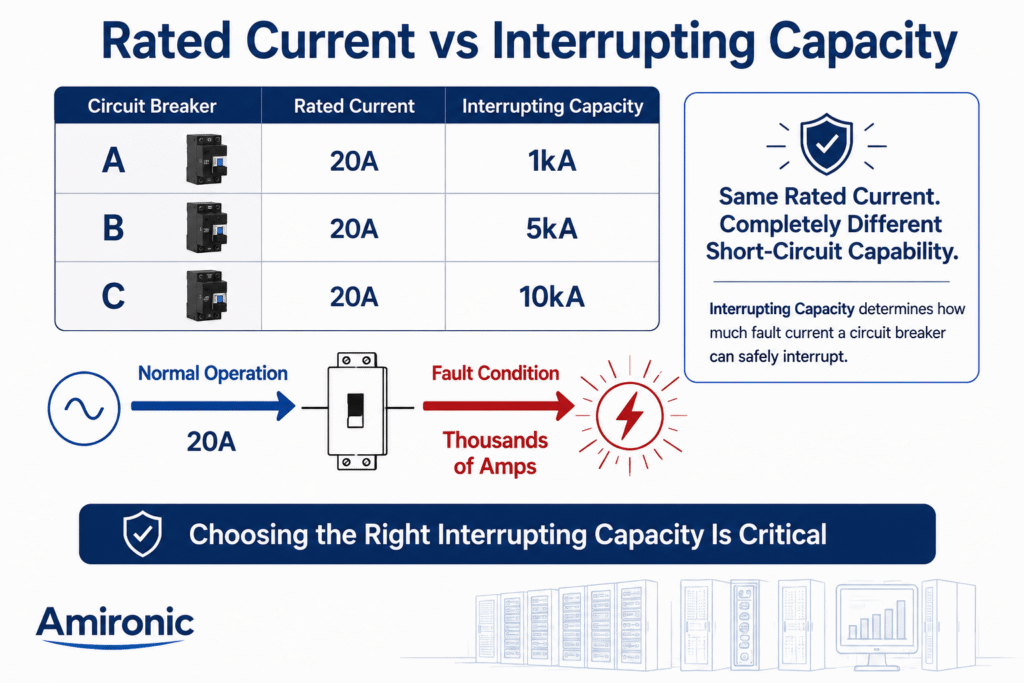
- Can it safely interrupt high fault currents?
- Is it compact enough for high-density equipment while supporting effective cooling and cable management?
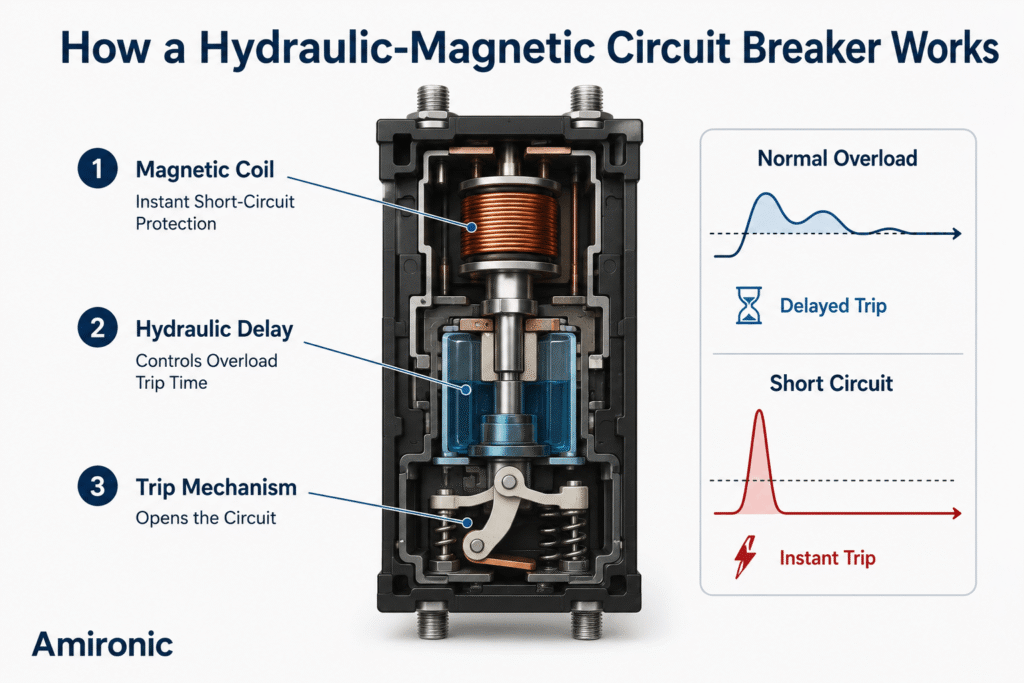
These challenges explain why an increasing number of OEMs are choosing hydraulic-magnetic circuit breakers instead of traditional thermal circuit breakers. The reason is not that hydraulic-magnetic technology is newer. Rather, its operating characteristics are often better suited to the demands of modern electrical systems.
In this article, we’ll examine how electrical protection requirements have evolved, why thermal circuit breakers are not always the optimal solution, and how hydraulic-magnetic circuit breakers address the needs of data centers, medical devices, military platforms, and other mission-critical industrial applications.