Aircraft electrical systems present significantly different requirements compared with conventional industrial electrical systems.
When an electronic system is powered from the electrical network of an aircraft, helicopter, or other airborne platform, knowing that the nominal supply voltage is, for example, 28VDC is not enough.
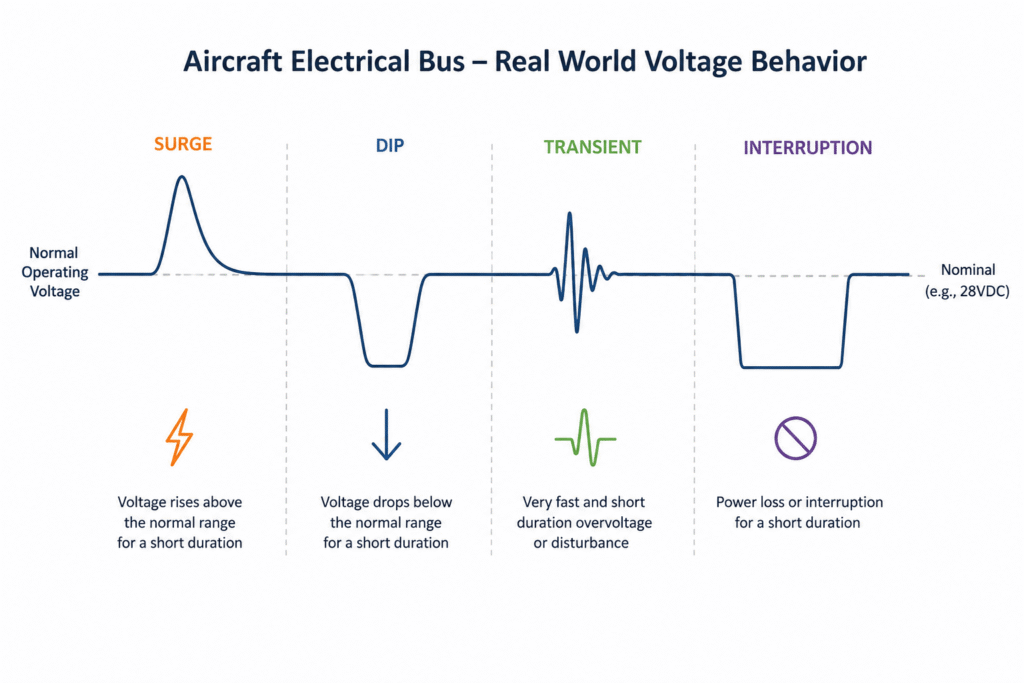
In practice, airborne equipment may be exposed to voltage variations, voltage dips, surges, disturbances, and other electrical events occurring during system startup, switching between power sources, load changes, and different operating conditions of the electrical system.
This is where MIL-STD-704 comes into play.
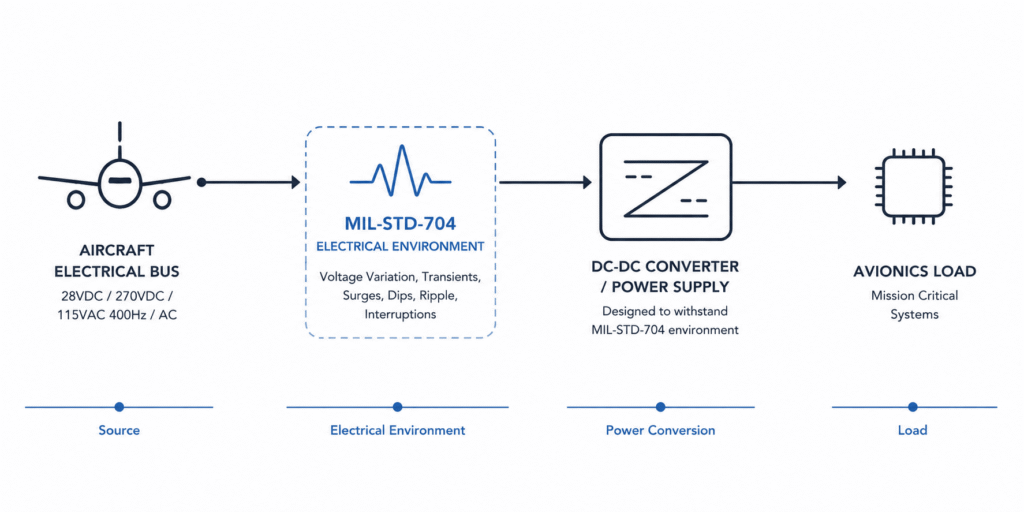
MIL-STD-704 is a U.S. military standard that defines the electrical power characteristics at the interface between the aircraft electrical power system and the electrical and electronic equipment connected to it.
The standard addresses characteristics such as:
- Voltage levels
- Frequency
- Voltage and frequency variations
- Ripple
- Transients
- Abnormal operating conditions
- Short-duration power disturbances and interruptions
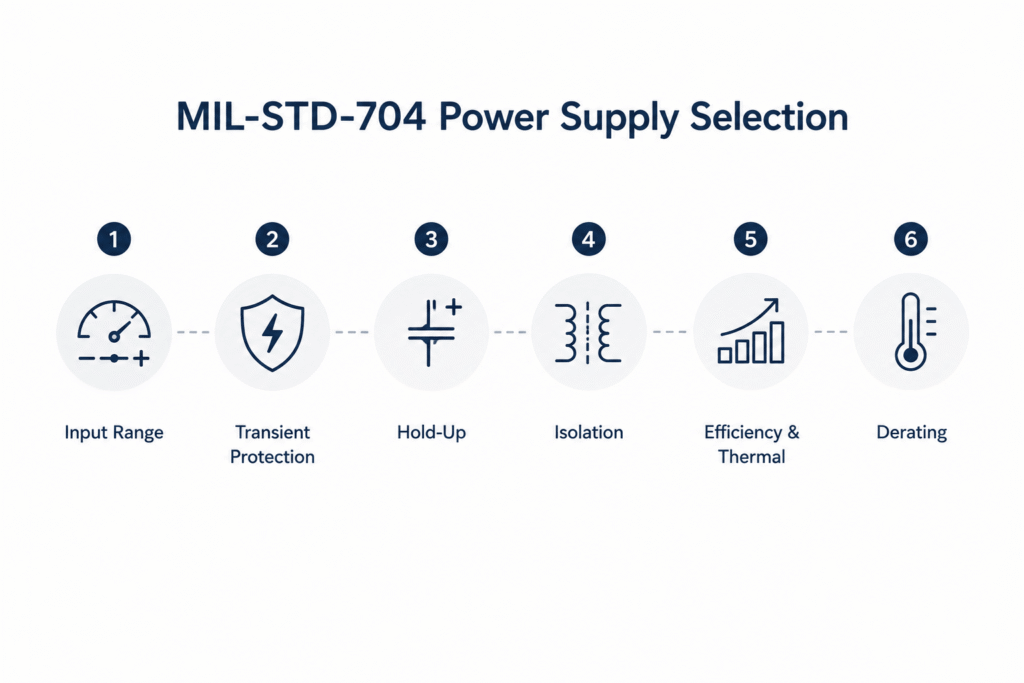
Therefore, when selecting a Power Supply or DC-DC Converter for an airborne system, the nominal input voltage is only the starting point.
The solution must be suitable for the actual electrical environment in which it is expected to operate.
What Is MIL-STD-704?
MIL-STD-704 defines aircraft electrical power characteristics and the electrical conditions that connected equipment may encounter at its interface with the aircraft power system.
The standard covers several types of aircraft electrical power systems, including:
- 28VDC
- 270VDC
- 115VAC at 400Hz
- Variable-frequency AC systems
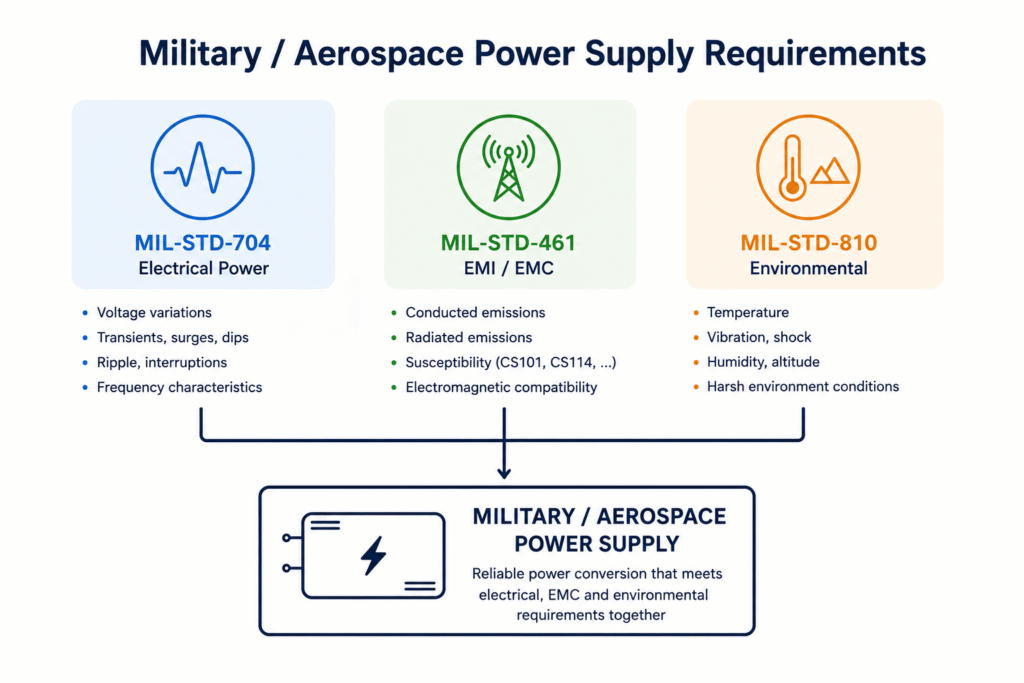
It is important to understand that MIL-STD-704 is not a specification for a particular power supply.
It defines the electrical environment at the interface between the aircraft and its equipment, and from this environment come the requirements that the power supply, DC-DC converter, or input protection system must be able to handle.
For example, a converter specified for a nominal 28VDC input is not automatically suitable for an aircraft electrical system based on 28VDC.
The reason is simple: 28VDC is a nominal value, not a complete description of the electrical environment.
A converter intended for an airborne system must be selected according to the input voltage ranges and electrical conditions relevant to the application, rather than solely according to the nominal voltage stated in the system specification.