The rapid growth of AI and GPU-based computing is not only increasing computing performance – it is also changing the way Data Center power infrastructure needs to be designed.
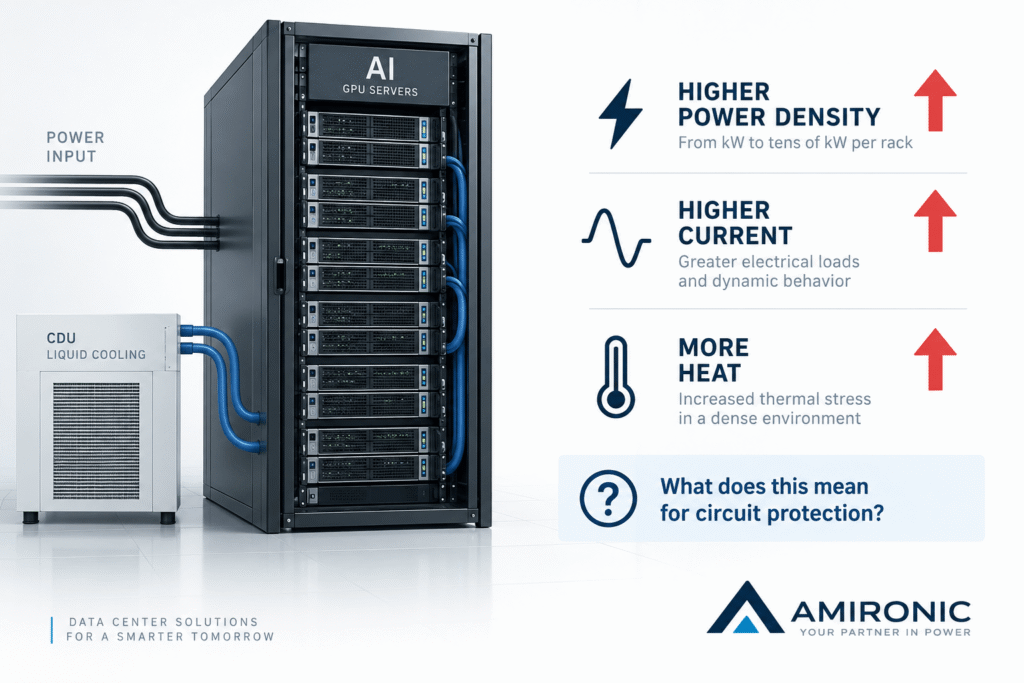
A modern server rack built for AI workloads can concentrate significantly more power than a traditional rack. Higher power density brings a new set of engineering challenges: higher currents in parts of the power architecture, liquid cooling systems, dynamic loads, greater component density, and an increasing need to maintain extremely high system availability.
The result is not simply “more power.”
As the electrical environment changes, components that were once relatively straightforward to specify need to be reconsidered. One of them is the Circuit Breaker.
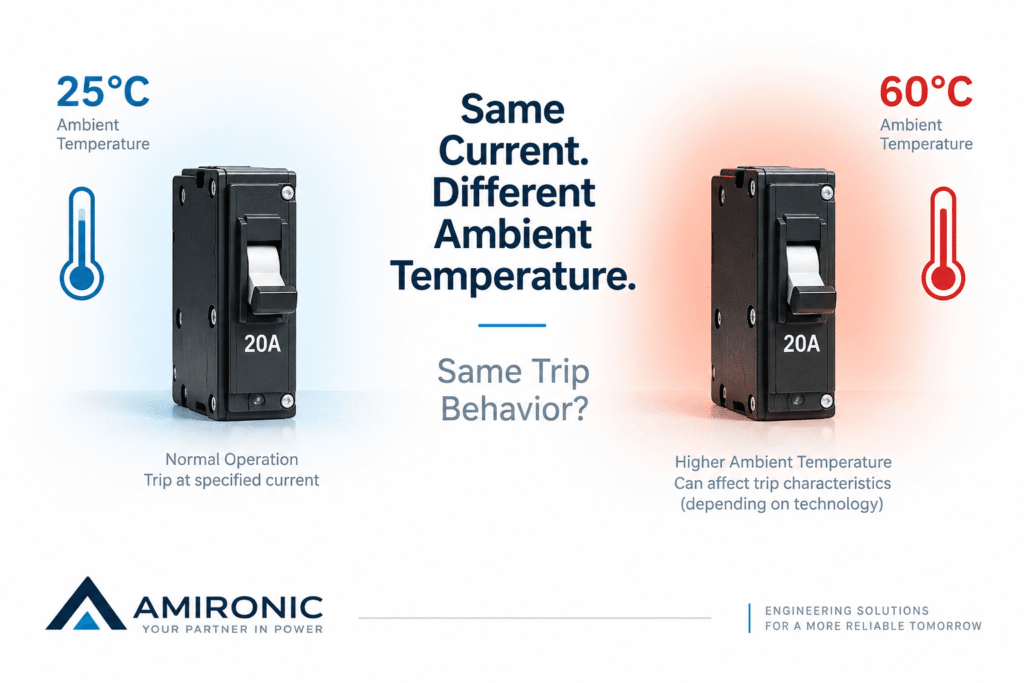
Selecting a circuit breaker based on rated current alone may no longer be sufficient. In an AI Data Center, engineers also need to consider ambient temperature, load characteristics, inrush current, installation density, the breaker’s location within the power architecture, and how the protection system is expected to behave during a fault.
So the engineering question is no longer simply:
Which Circuit Breaker is suitable for the required current?
It becomes:
Does the increasing power density of AI Data Centers require a different approach to Circuit Breaker selection and electrical protection?
Why Does an AI Data Center Change the Rules?
As computing power within the rack increases, so does the amount of electrical power that must be delivered to it – and the amount of heat that must be removed.
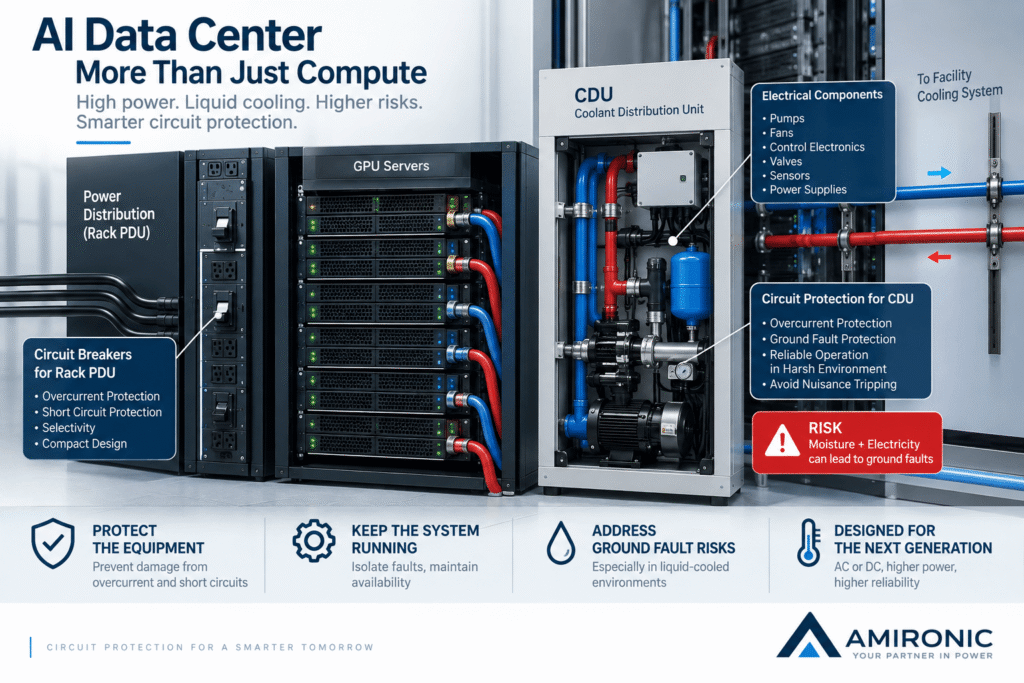
This affects an entire chain of systems: from power distribution and the Rack PDU, to the CDU – Coolant Distribution Unit, pumps, fans, power supplies, converters, and control electronics.
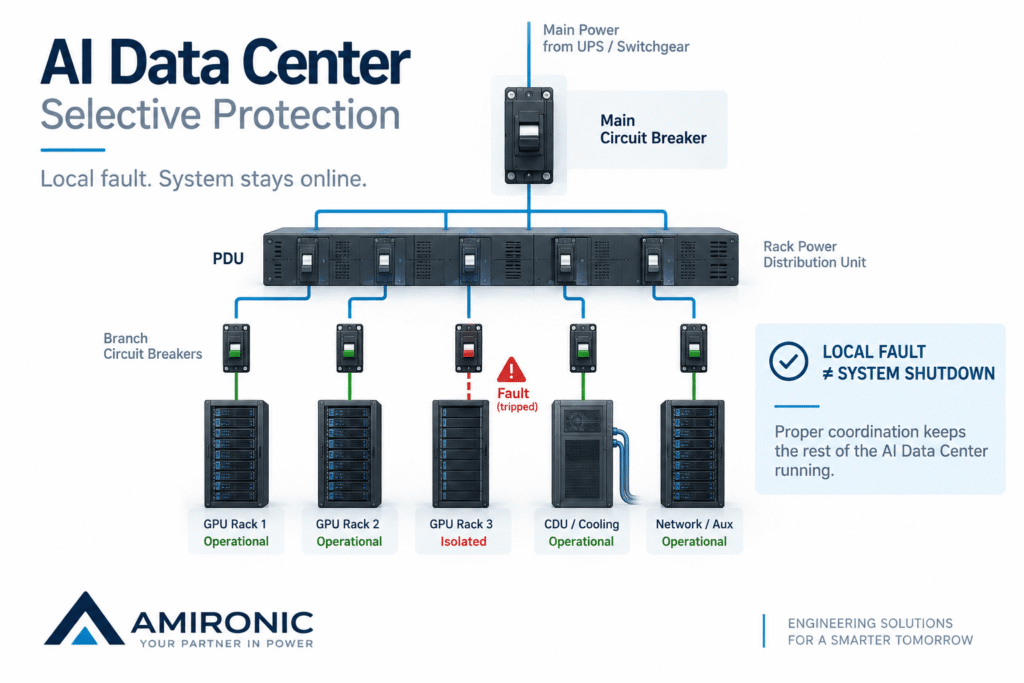
Each of these systems presents a different electrical load and may require a different protection strategy.
In other words, when an engineer is looking for a Circuit Breaker for an AI Data Center, the question can no longer be reduced to an ampere rating.
The real questions are: What exactly are we protecting? In what environment will the circuit breaker operate? And what happens to the rest of the system when it trips?