In High-Power Systems, Cooling Is No Longer Just About Fans and Heat Sinks
In high-power systems, cooling has long moved beyond traditional fans and heat sinks.
AI servers, radar and electronic warfare systems, mission computers, power converters, batteries, and electric propulsion systems generate enormous amounts of heat in increasingly compact spaces. As power density continues to rise, so does the use of Liquid Cooling – systems in which coolant transfers heat away from critical components to a heat exchanger, radiator, or central cooling unit.
But this raises an important question:
How do we know that the liquid cooling system is actually working as designed?
Temperature measurement alone tells only part of the story.
If the temperature rises, we know something is wrong. But in some cases, by the time a thermal problem becomes apparent, it may already be affecting the electronics.
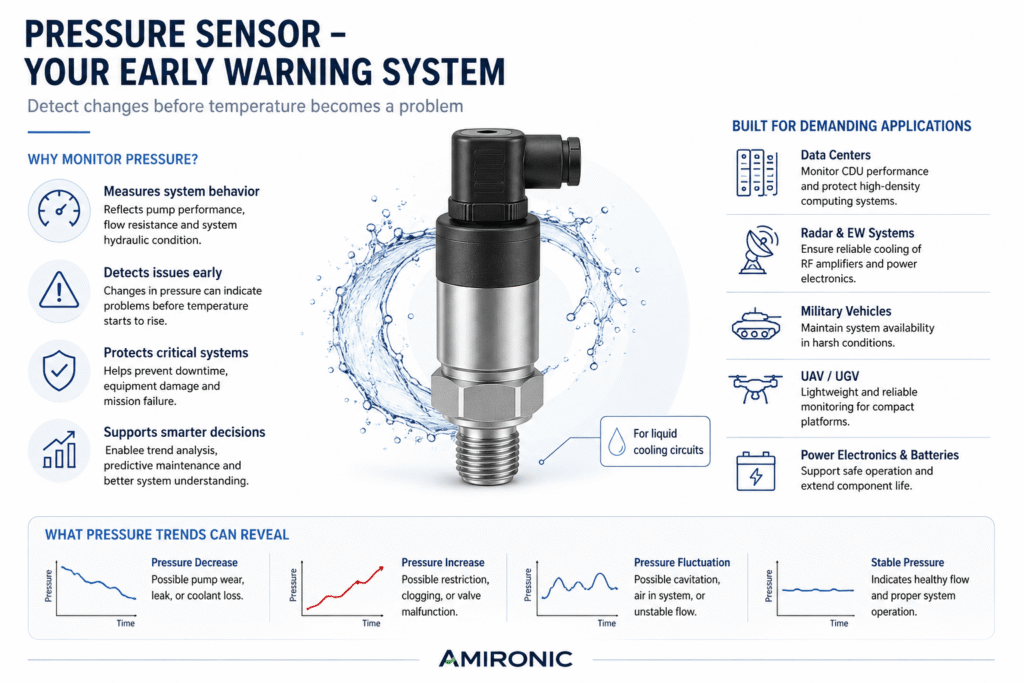
Changes in pressure, on the other hand, can provide valuable information about what is happening inside the cooling loop before the system reaches a critical temperature.
A degrading pump, partial blockage, clogged filter, coolant loss, or a change in flow resistance can all affect the system’s pressure profile.
This is why advanced cooling systems should not ask only:
“How hot is the coolant?”
They should also ask:
“What is the pressure, and is it behaving as expected?”
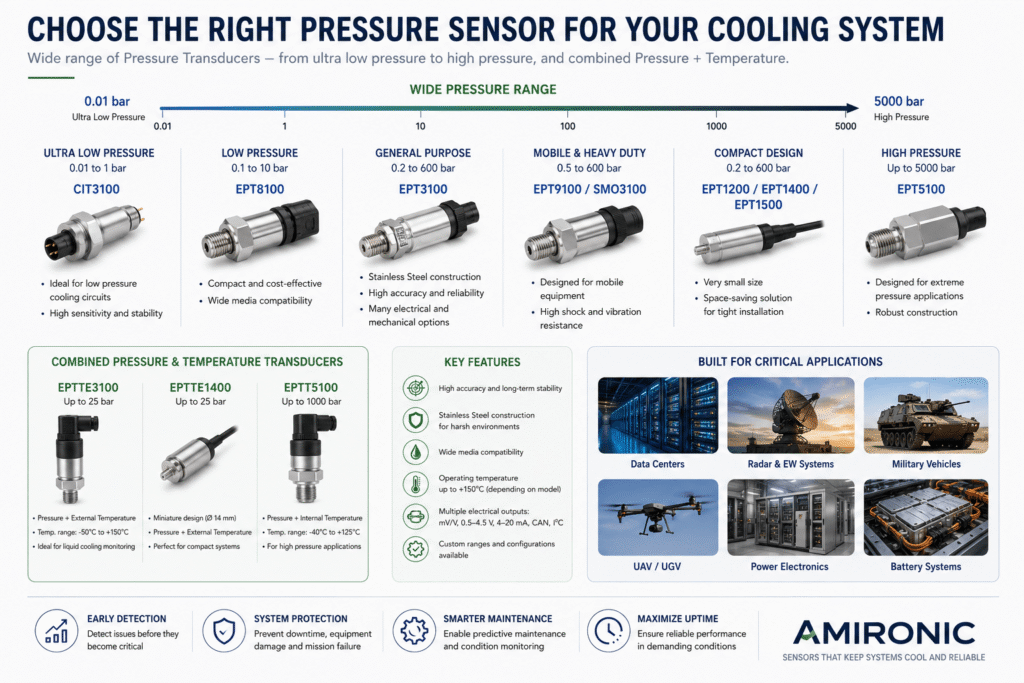
This is where accurate Pressure Sensors and Pressure Transducers, such as the wide range of solutions offered by Variohm, become an important part of cooling system monitoring.
Pressure and Temperature – Two Sides of the Same Cooling System
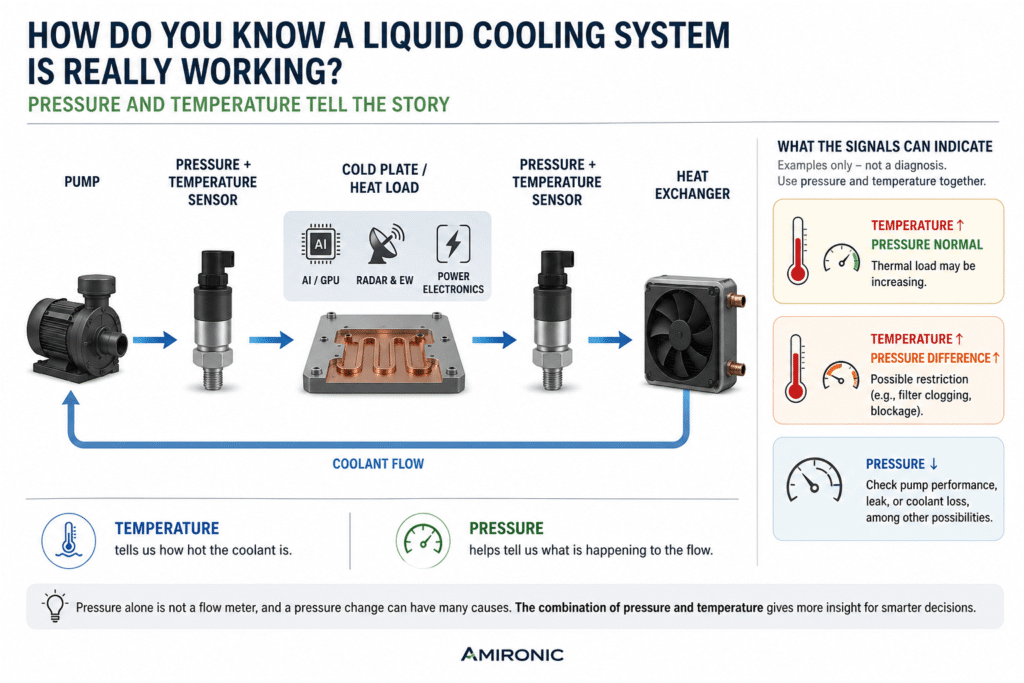
Consider a simple liquid cooling loop.
Coolant leaves the pump, flows through a Cold Plate or heat exchanger attached to a heat-generating component, absorbs thermal energy, and then returns to the cooling system.
Within this loop, we want to understand at least two key parameters:
Pressure – Is the pump producing the expected pressure, and is there any unusual resistance to flow?
Temperature – How much heat has the coolant absorbed, and what is happening to the thermal condition of the system?
Each measurement is valuable on its own.
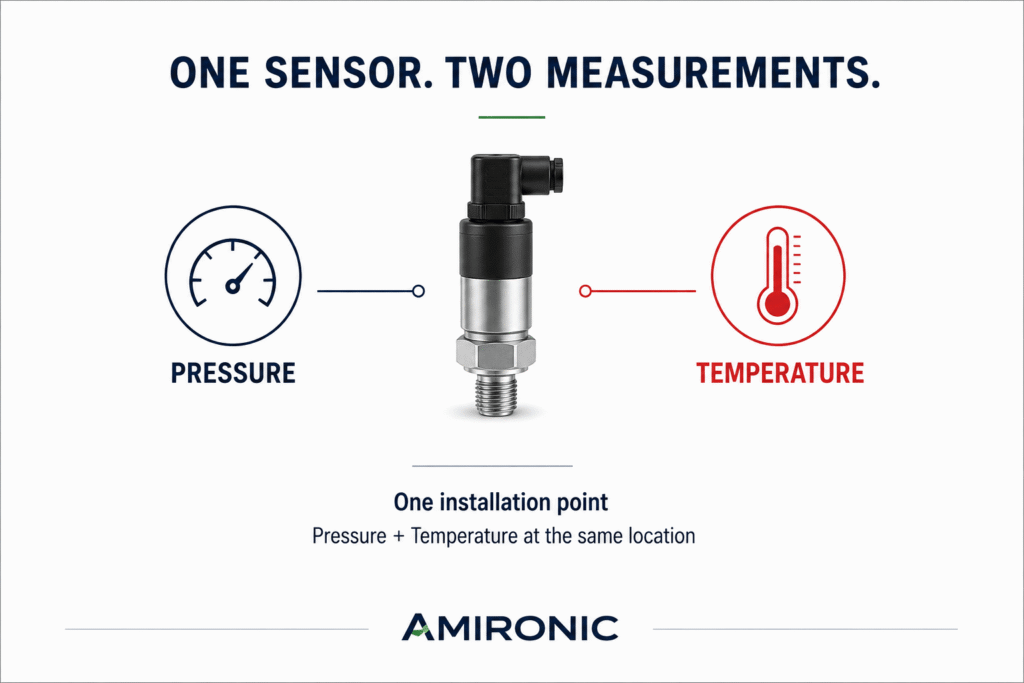
But when pressure and temperature are monitored together – and in some applications even at the same measurement point – they can provide a much more useful picture of cooling system behavior.
For example, a temperature increase while pressure remains stable may indicate a very different condition from a temperature increase accompanied by a significant pressure change.
In a critical system, that can be the difference between knowing:
“The system is getting hot.”
and understanding:
“Why is the system getting hot?”
That information can then be used for cooling system control, condition monitoring, fault detection, and system protection.
For applications where both parameters are required, Variohm Combined Pressure and Temperature Transducers provide pressure and temperature measurement within a single sensor assembly, helping reduce installation complexity while providing two critical measurements from the cooling system.