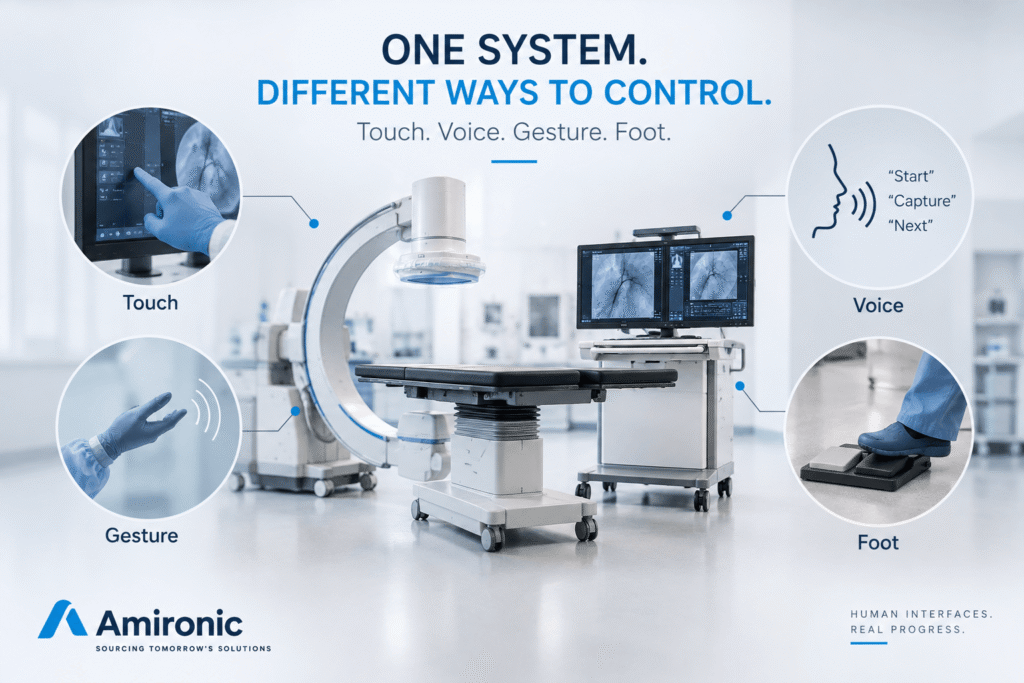
Medical Imaging systems have undergone a major transformation over the past few decades. Touchscreens have replaced control panels crowded with buttons, software interfaces have become increasingly sophisticated, some systems now incorporate Voice Control, and technologies such as Gesture Recognition and other touchless control methods are also being explored.
And yet, even in some of the world’s most advanced medical imaging systems, one component continues to appear despite seeming almost too simple compared with the technology surrounding it: the Footswitch.
This is not necessarily a legacy of outdated technology.
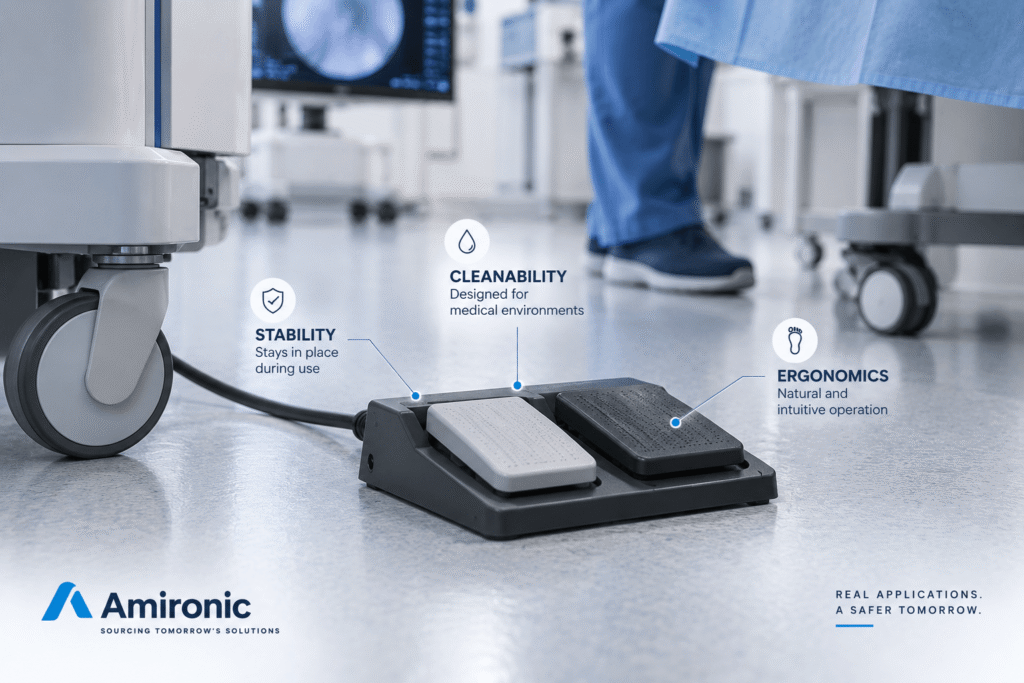
In certain applications, the very fact that a Footswitch separates system control from the user’s hands is precisely what makes it such an effective interface.
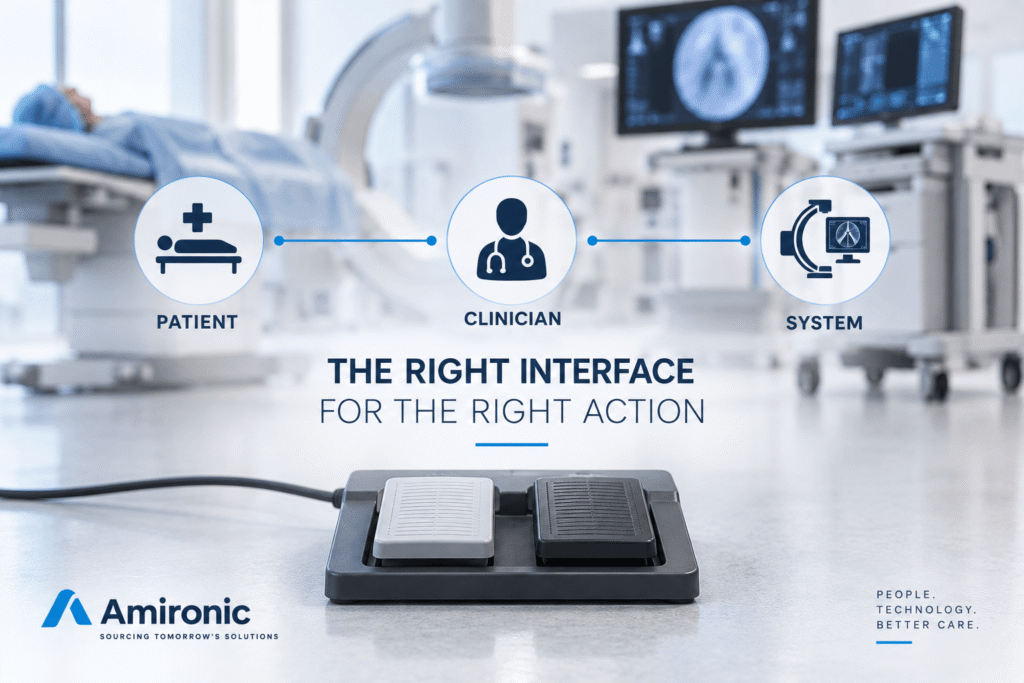
When a physician, technician or operator needs to remain focused on the patient, hold a Probe, work with additional equipment or monitor an image in real time, the question is not simply which interface is the most advanced, but which interface integrates most effectively into the clinical Workflow.
And that is already an engineering challenge involving the Human-Machine Interface – HMI.
Why Use a Footswitch in a Medical Imaging System?
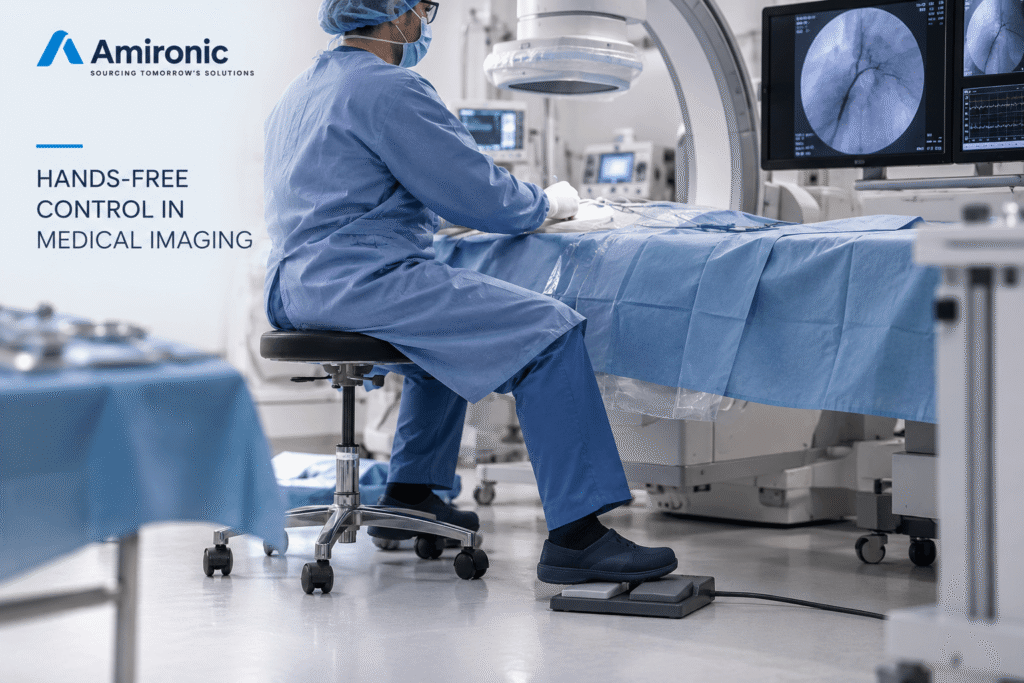
In a Medical Imaging system, the user may need to perform several tasks simultaneously.
The operator may be monitoring an image on the display, positioning the patient, holding a medical device, adjusting the imaging system or performing another clinical task. In this situation, any action that requires the user to move away from the patient or equipment and locate a button on the Console can interrupt the natural Workflow.
A Footswitch allows certain commands to be transferred to the foot.
Depending on the system and its design, the Footswitch may be used for functions such as:
- Starting or stopping an operation
- Activating Fluoroscopy or Acquisition
- Capturing or saving an image
- Switching between Operating Modes
- Activating a predefined function
- Controlling additional functions according to the system architecture
This is not merely a theoretical possibility. In commercially available C-arm systems, for example, Footswitches are used to activate Fluoroscopy and different Acquisition modes. Some systems also use multifunction Footswitches for functions such as saving images and switching between operating modes.
In other words, a Footswitch is not necessarily just an ON/OFF switch sitting on the floor.
It can be an integral part of the imaging system’s control interface.