Choosing a switch can often seem like one of the simplest decisions in system design.
You need to activate a function, select a suitable switch, connect it to the system, and move on.
In practice, however, the switch is the interface between the user, the operating environment, and the control system. Choosing the wrong solution can therefore lead to problems involving safety, reliability, ergonomics, cleaning, wiring, and system integration.
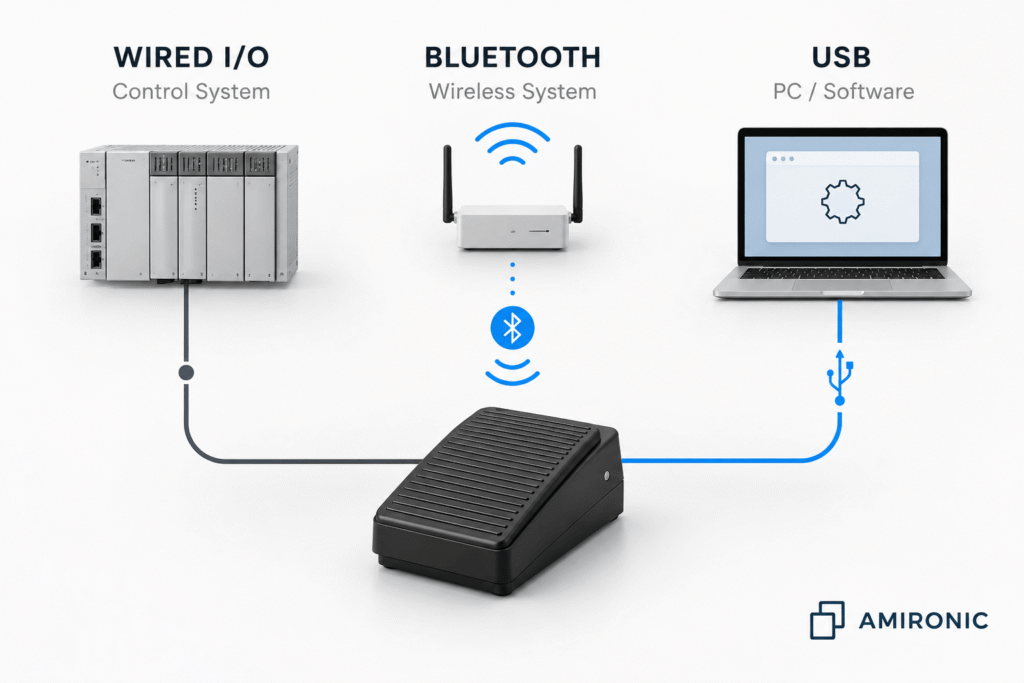
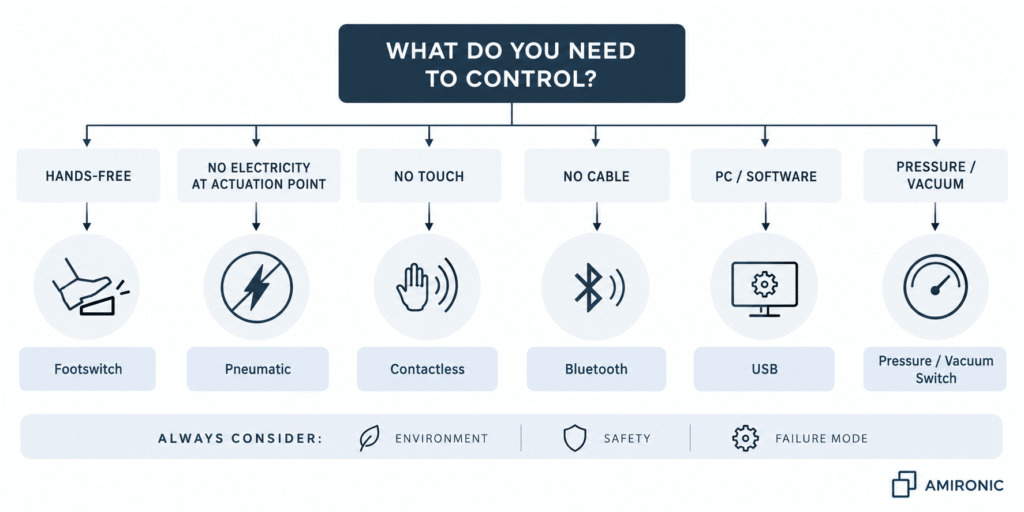
Today, medical, industrial, and OEM systems can use a wide range of switching technologies, including conventional electrical switches, footswitches, pneumatic switches, contactless sensors, Bluetooth, USB, and pressure or vacuum switches.
The right question is therefore not simply:
“Which switch meets the electrical requirements?”
But rather:
“Which switching technology best matches the way the system will actually be used?”
In this guide, we look at the key questions engineers should ask before selecting a switch.
1. Should There Be Electricity at the Point of Actuation?
This is one of the first questions worth asking.
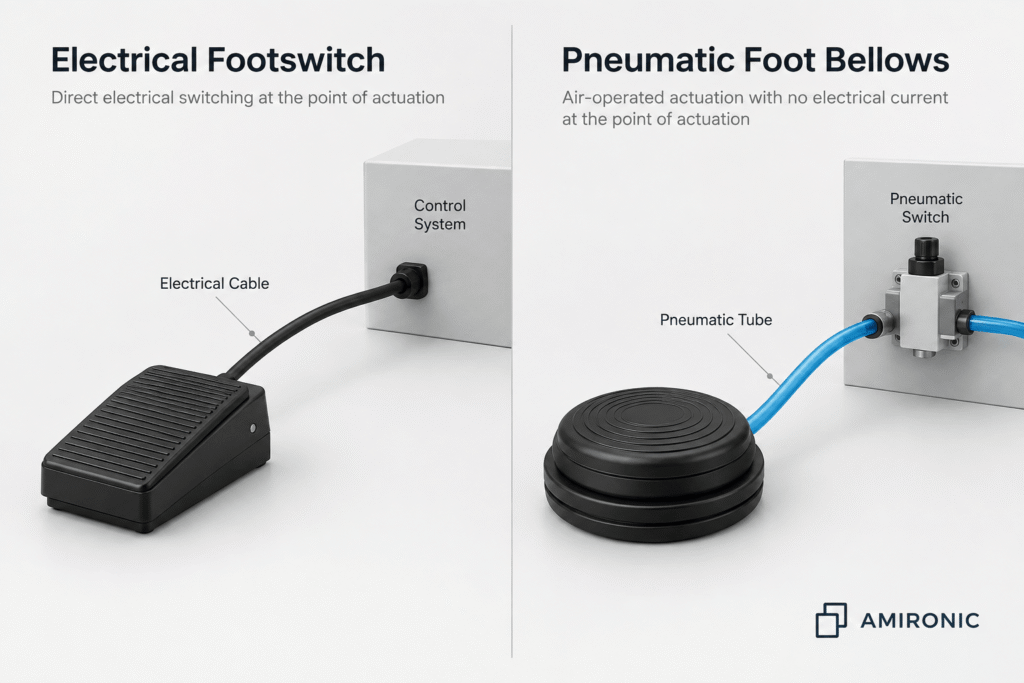
With a conventional electrical switch, the user’s action is translated directly into electrical switching. It is a simple, well-established, and reliable solution suitable for a very wide range of systems.
However, there are applications where having electrical wiring and contacts at the point of actuation is undesirable.
For example:
- Wet environments
- Certain medical equipment
- Applications where separation between the user and the electrical circuit is required
- Systems where the point of actuation is exposed to liquids or frequent cleaning
In these situations, a pneumatic switch may be worth considering.
The user presses a pneumatic bellows or actuator, creating a change in air pressure inside a tube. The electrical switch itself can then be located elsewhere in the system.
In other words, electrical switching can be kept away from the actual point of actuation.
This is a good example of why switch selection should not begin with current and voltage ratings alone. It should begin with the operating environment and the architecture of the system.